Araraquara Fruit Stand Trusts Customers with Self-Checkout System
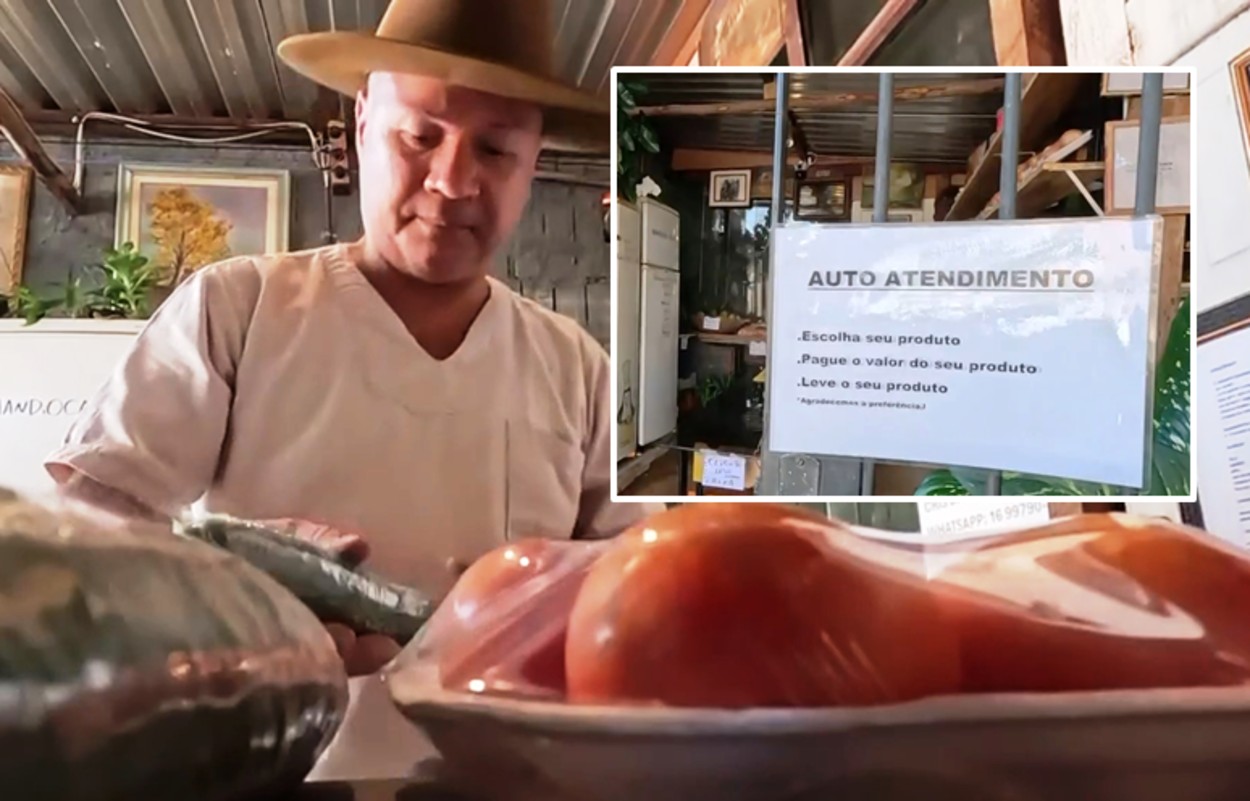
A fruit and vegetable stand in Araraquara, São Paulo, Brazil, has adopted a self-service model relying entirely on customer honesty. Owner Cristiano Aparecido Ferreira decided to open the store without employees, allowing customers to select their produce and pay using various methods, including cash, card, or Pix. Ferreira stated that the system has been largely successful, with only one reported instance of a customer failing to pay in the months since its opening. He expressed his belief in people's integrity, noting that the business is functioning with approximately 95% satisfaction. The small shop, located in the Jardim Águas do Paiol neighborhood, features refrigerated produce, and customers are responsible for calculating their purchases. A repurposed antique pot serves as a cash box for those paying with money, and a calculator is available to assist customers. Some patrons even record their purchases in a notebook to aid inventory management. While trusting his customers, Ferreira has installed security cameras as a precaution. He believes that fostering trust is essential for societal progress and views the business as an opportunity to share his work and derive pleasure from it, rather than solely focusing on profit. Regular customers, like retiree Tereza Rodrigues dos Santos, appreciate the 'trust system,' feeling that their honesty is reciprocated by the owner's confidence in them.
This self-checkout model for a small produce business highlights a fascinating interplay between community trust, operational efficiency, and the inherent risks of commercial transactions. By minimizing overhead through the elimination of staff, the business potentially achieves higher profit margins, provided that pilferage and non-payment remain negligible. The owner's explicit reliance on customer honesty, while admirable and potentially fostering strong community ties, represents a significant gamble against broader societal trends that often necessitate robust security measures. The integration of technology like payment apps and security cameras suggests a pragmatic approach, balancing idealistic trust with modern risk mitigation. This model's long-term viability may depend on the specific demographics and social fabric of the neighborhood, and its scalability to larger or more transient customer bases remains an open question, particularly in an era where digital anonymity can sometimes embolden unethical behavior.
AI-generated to prompt reflection — not editorial opinion, not advice, not a statement of fact. How this works.