Araraquara's elder care initiative featured in state publication
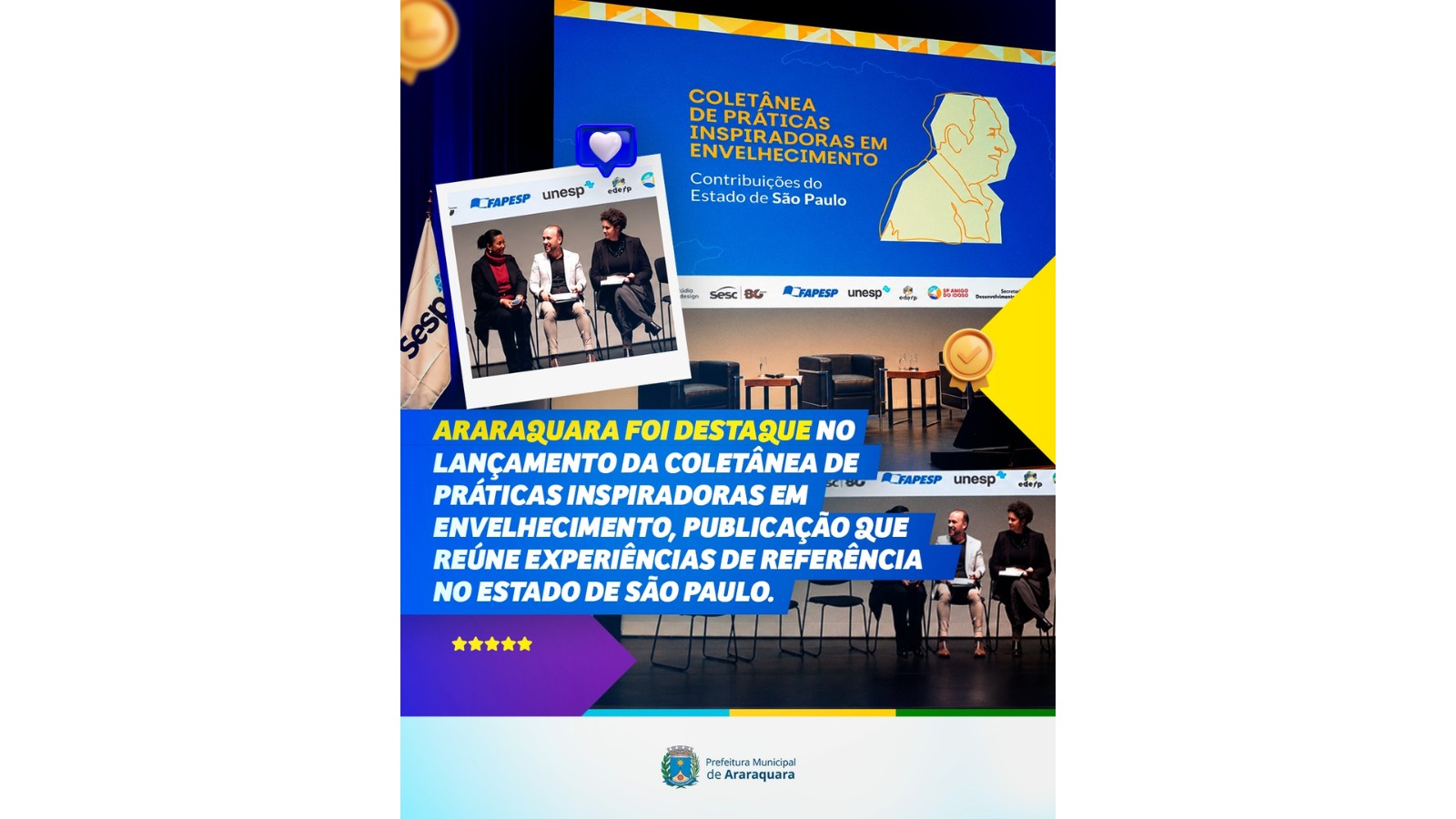
On June 24th, São Paulo hosted the launch of "Coletânea de Práticas Inspiradoras em Envelhecimento: contribuições do Estado de São Paulo" at SESC Belenzinho. This publication, developed by the São Paulo State Secretariat of Social Development through the São Paulo Amigo do Idoso Program, involved collaboration with the Unesp Economics course in Araraquara and the São Paulo State Research Support Foundation (Fapesp). Araraquara was recognized for its high-complexity elderly care service, Recanto Feliz. The publication highlights inspiring initiatives for active and healthy aging in social assistance and health, based on research across 26 Regional Divisions of Social Assistance and Development (DRADS). Selection criteria included innovation, implementation, effectiveness for the elderly, and replicability. Eloisa Helena Baptista da Silva, social worker and head of Recanto Feliz, represented Araraquara at the event. She participated in a discussion panel on "Dependence and Personal and Social Risk: intermediate services, income transfer, and strategies for safe and protected institutional care." Baptista da Silva emphasized that the collection validates the team's work and increases visibility for initiatives improving elderly quality of life, fostering experience exchange and inspiring new actions. She also credited the success to the diverse professional team whose careful work considers the specificities of aging. The collection is intended to serve as a public management support tool for municipalities across São Paulo.
This initiative showcases a state-level effort to identify and disseminate best practices in elder care, aiming to improve the quality of life for seniors through institutional learning and replication. The selection process, which considered innovation, effectiveness, and replicability, suggests a structured approach to policy development. The involvement of academic institutions like Unesp and research funding bodies like Fapesp indicates a commitment to evidence-based strategies. The publication's focus on active aging and institutional care reflects a growing awareness of demographic shifts and the need for robust social support systems. The future challenge lies in ensuring the practical implementation and scalability of these practices across diverse municipal contexts, fostering inter-municipal collaboration and adapting successful models to local needs and resources within the evolving landscape of public health and social services.
AI-generated to prompt reflection — not editorial opinion, not advice, not a statement of fact. How this works.