Archaeologists Uncover 18 Burials in Early Christian Church in Turkey
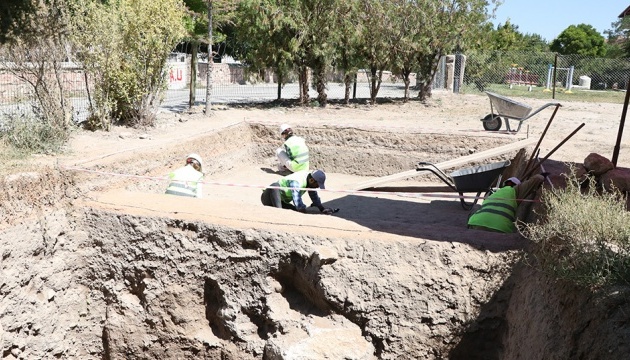
Archaeologists in Turkey's Niğde province have opened 18 out of 42 discovered burials for research. These findings are located within an octagonal church dating back to the late Roman period in the ancient city of Tyana. The ongoing excavations aim to further understand the historical significance of this early Christian site. The church's architecture, being octagonal, suggests a notable design for its time. The late Roman period is a critical era for understanding the transition to Christianity in the region. The discovery of 42 burials provides a substantial dataset for anthropological and historical analysis. Researchers will examine the remains to learn more about the individuals buried there, their health, diet, and social status. The context of the burials within a church highlights the religious practices and beliefs of the community. Further study is expected to shed light on the cultural interactions and developments during that period in Anatolia. The team is meticulously documenting each burial to ensure accurate data collection.
The unearthing of 18 burials within an early Christian church in Tyana, Turkey, offers a valuable opportunity to study late Roman-period funerary practices and societal structures. By examining these remains and their context, researchers can gain insights into the demographics, health, and religious beliefs of the community that used this church. This archaeological endeavor, by providing empirical data, can help to deconstruct historical narratives and offer a more nuanced understanding of the region's transition during the late Roman era. The systematic excavation and analysis of these burials are crucial for building a robust historical record, free from speculation, and contributing to the broader academic discourse on early Christianity in Anatolia.
AI-generated to prompt reflection — not editorial opinion, not advice, not a statement of fact. How this works.