Archbishop of Canterbury Pledges £100m for Communities Impacted by Enslavement
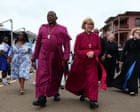
During her inaugural visit to Ghana, Archbishop of Canterbury Dame Sarah Mullally visited Cape Coast Castle, a historic site involved in the transatlantic slave trade. She expressed deep regret for the Church of England's historical role in chattel slavery. Mullally reaffirmed the Church's commitment to a £100 million fund aimed at supporting communities affected by enslavement. The visit took place at the 17th-century fortress, which has a complex history of occupation by Swedish, Danish, Dutch, and British forces. Mullally stated that the fund symbolizes the Christian principle of repentance. This visit marks a significant moment in acknowledging and addressing the legacy of the Church's involvement in this historical injustice.
The Archbishop's visit and pledge represent a symbolic acknowledgment of historical injustices and a commitment to restorative action. The £100 million fund, framed as an act of repentance, seeks to address the enduring impacts of the transatlantic slave trade on affected communities. This initiative highlights the evolving relationship between historical institutions and their legacies, prompting reflection on corporate and governmental responsibilities in confronting systemic inequalities. The long-term efficacy of such funds will likely depend on transparent governance, community-led initiatives, and sustained engagement beyond symbolic gestures, as societies grapple with the intergenerational consequences of past exploitation in the context of global economic and social justice.
AI-generated to prompt reflection — not editorial opinion, not advice, not a statement of fact. How this works.