Arctic Sediment Reveals Mountain Erosion Patterns
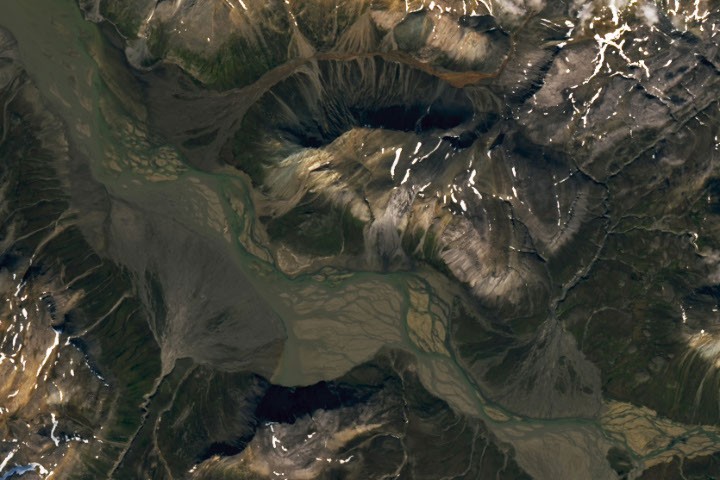
Sediment originating from the ice-capped mountains of Russia's Severny Island is being transported and deposited across a wide river valley. This process of erosion and sediment dispersal highlights the dynamic geological activity occurring in the Arctic region. The visible splay of sediment indicates significant material transfer from elevated, glaciated areas to lower-lying plains. This phenomenon is crucial for understanding landscape evolution in polar environments. The deposition patterns can provide insights into past glacial activity and current erosional forces. Studying such features helps scientists reconstruct the geological history of the Arctic. It also informs models predicting future landscape changes under varying climatic conditions. The Severny Island example offers a clear illustration of how mountain erosion shapes distant landforms.
The observation of sediment dispersal from Arctic mountains offers a window into the ongoing geological processes shaped by climate. The rate and extent of erosion and subsequent deposition are directly influenced by glacial melt and freeze-thaw cycles, which are sensitive indicators of regional temperature shifts. Understanding these sediment dynamics is vital for predicting landscape changes in the Arctic, a region experiencing accelerated warming. This data can inform infrastructure planning and environmental management strategies for Arctic territories. Furthermore, analyzing sediment composition can reveal information about the source rock and the history of glaciation, contributing to a broader understanding of Earth's paleoclimates and future environmental trajectories.
AI-generated to prompt reflection — not editorial opinion, not advice, not a statement of fact. How this works.