Argentina-Brazil Rivalry Built on False Premise, Analyst Claims
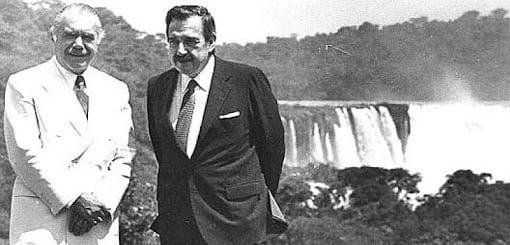
A recent analysis suggests that the long-standing rivalry between Argentina and Brazil is founded on a false premise. The commentary highlights the contributions of former presidents Raúl Alfonsín and Roque Sáenz Peña, who are described as great statesmen and friends of Brazil. These leaders, according to the analysis, understood the importance of strong diplomatic ties between the two South American nations. The author advocates for a diplomatic approach guided by the principle "Everything unites us, nothing divides us." This perspective challenges the narrative of inherent conflict and instead emphasizes shared interests and historical cooperation. The piece implies that a focus on division detracts from the potential for mutual benefit and regional stability. It calls for a renewed commitment to diplomacy that prioritizes unity and collaboration over perceived competition. The underlying message is that the historical relationship between Argentina and Brazil has been shaped by a misunderstanding that can be overcome through a more enlightened diplomatic strategy.
The assertion that the Argentina-Brazil rivalry rests on a false premise invites a re-examination of bilateral relations through a lens of strategic cooperation rather than zero-sum competition. Historical narratives often emphasize geopolitical competition, but a forward-looking perspective, particularly in the context of evolving global dynamics and the rise of AI-driven economies, suggests that regional integration and shared technological advancement offer greater collective benefits. Focusing on shared interests, as advocated by the principle "Everything unites us, nothing divides us," could unlock synergistic opportunities in trade, security, and innovation. This approach aligns with the long-term imperative for South American nations to enhance their global competitiveness by acting in concert, rather than allowing historical grievances or perceived rivalries to impede progress and mutual development.
AI-generated to prompt reflection — not editorial opinion, not advice, not a statement of fact. How this works.