Argentina faces FIFA probe for displaying "Malvinas are Argentinian" banner after England win
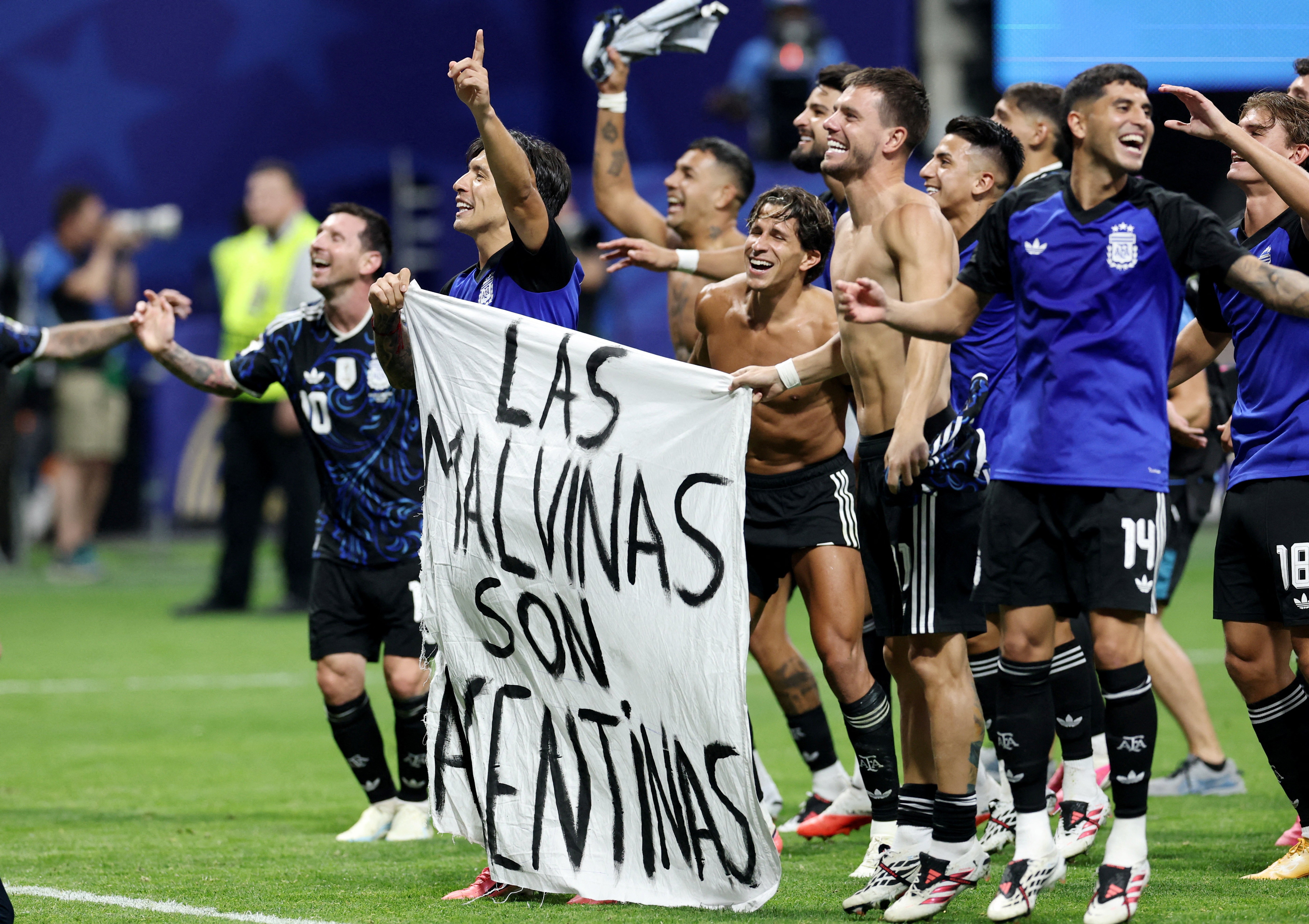
Argentina may face disciplinary action from FIFA after its players displayed a banner supporting Argentina's claim over the Falkland Islands, known as Las Malvinas, following their dramatic 2-1 victory against England in the 2026 World Cup semifinals. The reigning world champions secured their spot in the final against Spain after scoring two late goals. After the match, Argentine players celebrated by holding a banner that read 'Las Malvinas son Argentinas' ('The Malvinas are Argentinian'). The Falkland Islands are a British Overseas Territory in the South Atlantic, subject to a sovereignty dispute between the UK and Argentina, which led to a war in 1982 resulting in significant military and civilian casualties. This is not the first time Argentina has faced FIFA scrutiny for such displays; in 2014, the Argentine Football Association was fined approximately R$136,000 for a similar banner, as FIFA rules prohibit political statements in football. Argentina's Vice President, Victoria Villarruel, publicly supported the players' actions, stating the islands are carried 'in blood and heart' and criticizing perceived attempts to prevent the banner's display. British Secretary of Business and Trade, Peter Kyle, deemed the banner 'totally inappropriate' and called for a thorough FIFA investigation, citing a clear violation of political activity prohibitions. Despite coach Lionel Scaloni's prior statements about not mixing football with politics and respecting the historical sadness of the Malvinas War, players also sang songs referencing the islands and football legends Diego Maradona and Lionel Messi after their earlier win against Egypt. The semifinal match itself was held under heightened security due to the historical tensions between the two nations.
The display of the 'Las Malvinas son Argentinas' banner by the Argentine team, while emotionally resonant for many in Argentina, intersects with FIFA's established regulations against political expressions in sports. FIFA's historical precedent of fining the Argentine Football Association for a similar incident in 2014 underscores a consistent policy aimed at maintaining a apolitical stance within the sport. The tension between nationalistic sentiment, historical grievances, and the governing body's rules presents a recurring challenge for international sports organizations. Moving forward, the increasing interconnectedness of global events and social media amplification means that such displays will likely continue to draw scrutiny, prompting a need for clearer guidelines or a re-evaluation of how sports can navigate politically charged symbols without compromising the integrity of competition or alienating stakeholders.
AI-generated to prompt reflection — not editorial opinion, not advice, not a statement of fact. How this works.