Argentina Faces Scrutiny Over 'Falklands Belong to Argentina' Banner After World Cup Win
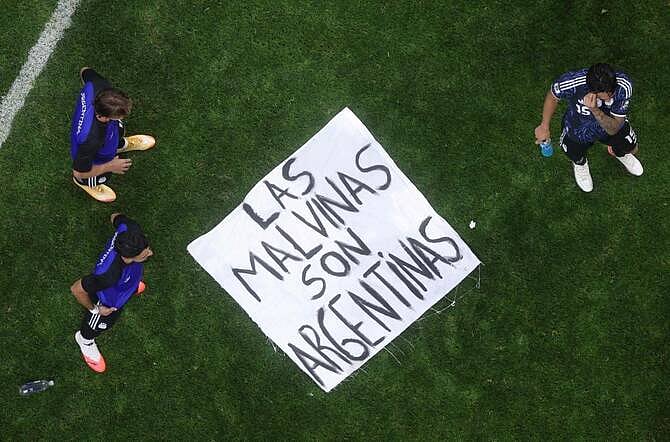
Argentina has reached the World Cup final for the second consecutive time after a thrilling 2-1 victory over England, but their celebration was accompanied by a banner asserting Argentina's claim over the Falkland Islands. This political message has raised questions about potential repercussions for the Argentine team. The Falklands, known as 'Malvinas' in Spanish, have been a source of long-standing dispute between Argentina and the UK, stemming from a 1982 war where England regained control of the islands. The historical significance of this conflict was evoked by Diego Maradona after Argentina's 1986 World Cup quarter-final victory over England, and the 'Malvinas Argentinas' banner reflects this enduring sentiment. FIFA's regulations prohibit political, religious, or personal slogans, statements, or images on the field, and the organization had previously banned Falklands flags before matches. The presence of the banner has prompted the British government, through Business Secretary Peter Kyle, to call for a thorough FIFA investigation, emphasizing that such actions are unacceptable and that politics should remain separate from sports, especially at the World Cup. Despite FIFA's strict stance on maintaining neutrality, as seen in past instances like forcing Haiti to change jerseys and denying France's request for a moment of silence for coach Didier Deschamps' mother, the specifics of any potential sanctions against Argentina remain unclear. Argentina's Vice President Victoria Villarruel expressed a strong emotional connection to the Falklands, stating they will always be Argentinian. Historically, FIFA has imposed fines for political displays, ranging from $5,000 to $20,000, and has also issued player suspensions. Argentina's Football Association was previously fined 20,000 Euros in 2014 for a similar banner during a friendly match against Slovenia. FIFA has not yet issued an official statement regarding the recent incident.
The incident highlights the persistent tension between nationalistic sentiment and FIFA's mandate for political neutrality in international sports. While Argentina's actions may be viewed through the lens of historical grievances and cultural identity, FIFA's regulations aim to prevent the politicization of the World Cup, ensuring a platform for sport rather than geopolitical statements. The potential sanctions, typically financial penalties or player suspensions, reflect FIFA's leverage to enforce its rules. This event underscores the ongoing challenge for global sporting bodies to navigate the intersection of sports, politics, and national identity, particularly in a highly visible tournament like the World Cup. Future events may see increased scrutiny of team celebrations and fan displays to maintain the intended apolitical nature of the competition.
AI-generated to prompt reflection — not editorial opinion, not advice, not a statement of fact. How this works.