Argentina players display 'Malvinas are Argentine' banner after beating England in World Cup
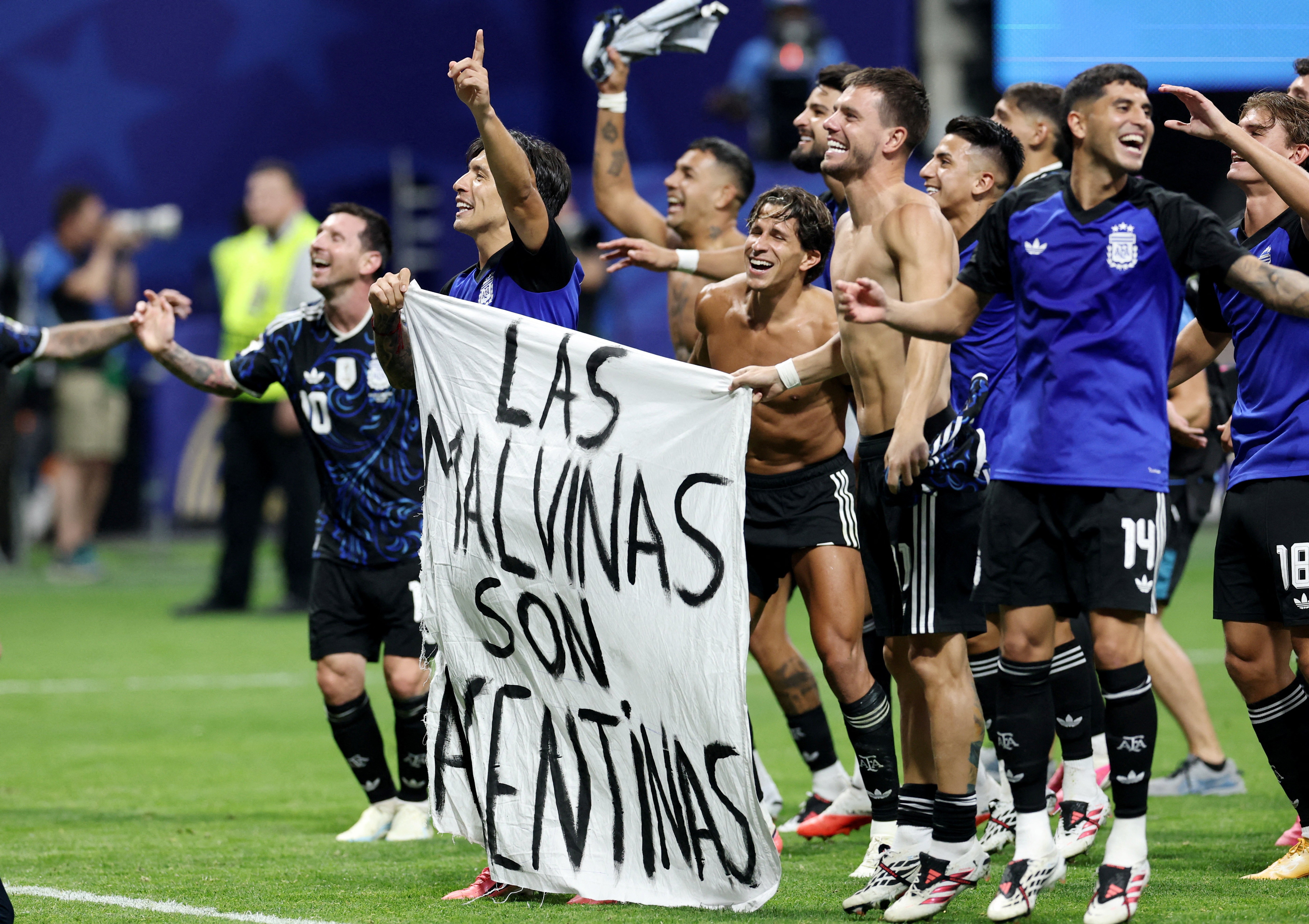
Following Argentina's 2-1 victory over England in the 2026 World Cup semifinals on Wednesday, December 15th, Argentinian players Lisandro Martínez and Giovani Lo Celso displayed a banner proclaiming 'Malvinas are Argentine.' This gesture highlights the long-standing territorial dispute over the South Atlantic archipelago, known as the Falkland Islands by the United Kingdom. The 1982 war over the islands, which Argentina lost with an estimated 650 soldiers killed, remains a sensitive point in bilateral relations. The current Argentinian president, Javier Milei, has reignited the sovereignty debate, a stance previously held by former presidents Cristina Kirchner and Mauricio Macri. Argentina's claim to the islands is based on geographical proximity, being approximately 600 km from Patagonia, and historical arguments of early Spanish and subsequent Argentinian occupation in the 1820s. Conversely, the UK asserts its claim dates back to 1765 and that it expelled Argentinian forces in 1833. The conflict escalated in April 1982 when Argentina launched Operation Rosario, leading to a war that concluded two months later with a British victory. The war resulted in the deaths of 649 Argentinian soldiers, 255 British combatants, and 3 island residents. In a 2013 referendum, Falkland Islanders overwhelmingly voted to remain an overseas territory of the United Kingdom.
The display of the 'Malvinas are Argentine' banner by Argentinian players post-match is a potent symbol of enduring national sentiment and historical grievance, transcending the immediate sporting context. This action taps into a deeply ingrained narrative of historical injustice and national pride, particularly resonant given the 1982 war and the subsequent referendum where islanders chose to remain a UK territory. From a geopolitical perspective, such symbolic acts underscore the persistent tension surrounding sovereignty claims in strategically important regions. While sports can serve as a platform for cultural expression and national identity, they can also amplify historical disputes. The long-term implications involve how these symbolic gestures influence diplomatic relations and public opinion in both nations, potentially complicating future bilateral engagements and highlighting the complex interplay between historical memory, national identity, and international relations in the 21st century.
AI-generated to prompt reflection — not editorial opinion, not advice, not a statement of fact. How this works.