Argentina's Complex History with Racism Debated Amidst International Accusations
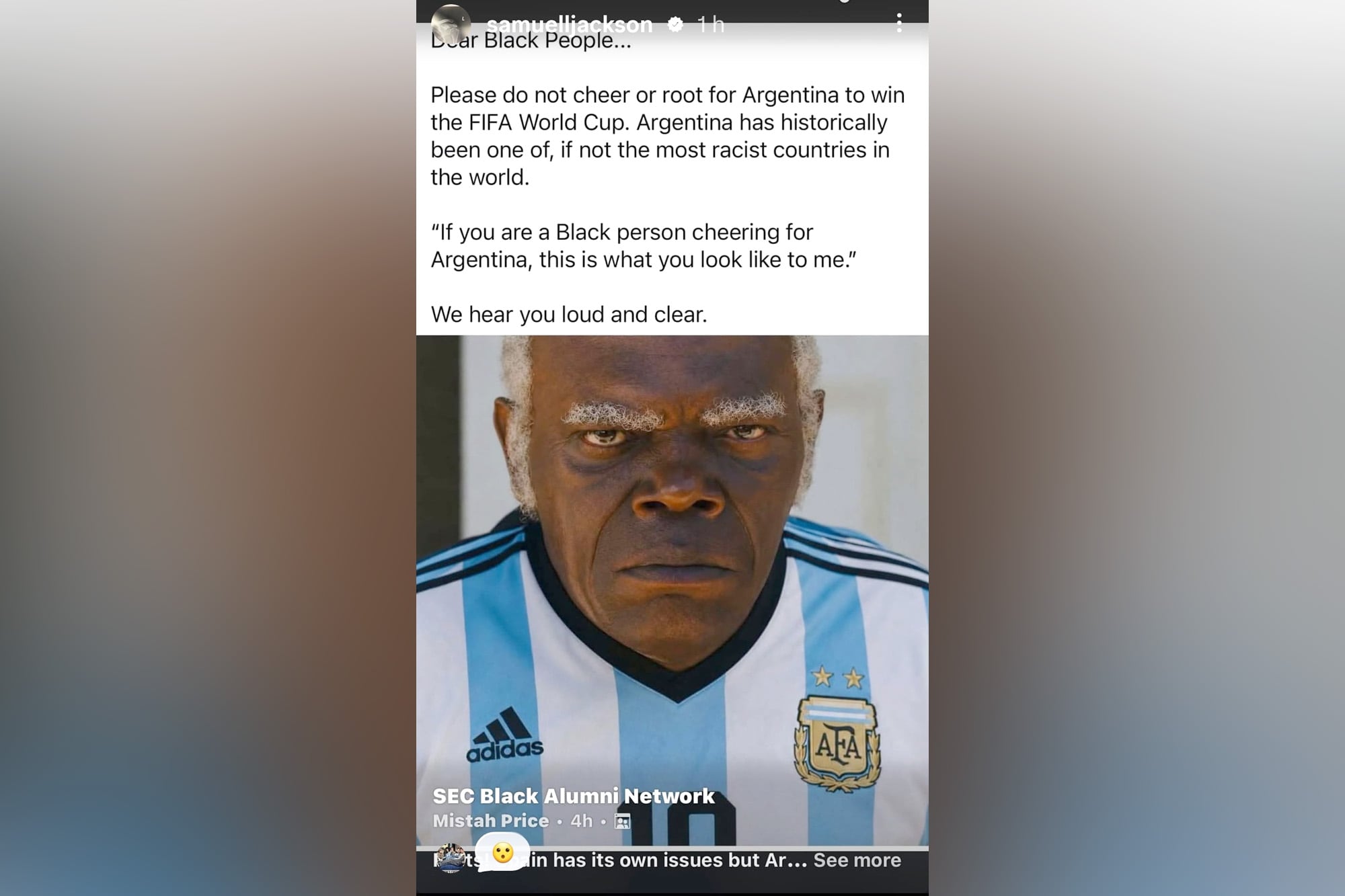
Actor Samuel L. Jackson recently accused Argentina of being one of the most racist countries globally, a claim the article contests by highlighting Argentina's historical efforts against slavery. The piece acknowledges that while Argentina is not inherently racist, it does have individuals exhibiting racist behaviors, distinct from the systemic racism seen historically in countries like the United States and South Africa. The article contrasts Argentina's "freedom of wombs" decree in 1813, which declared children born to enslaved mothers as free, with the prolonged and violent racial segregation experienced in the U.S. and the apartheid regime in South Africa. It notes that contemporary racism in the U.S. and Europe often targets immigrants, particularly Latinos in the U.S. and Africans and Arabs in Europe. The text also addresses internal discrimination in Argentina, where social class and economic status, rather than skin color, have historically defined terms like "cabecitas negras." Furthermore, it discusses Argentina's significant Jewish population, which arrived fleeing persecution, and the unfortunate persistence of antisemitism, evidenced by historical attacks and recent increases in online hate speech. The article concludes by examining how Argentina's international image has shifted over time, from a beacon of democracy to potentially being perceived as aligned with far-right ideologies under its current leadership, creating a complex narrative that contrasts with its history of integration.
The discourse surrounding racism in Argentina, particularly in light of international commentary, reveals a tension between historical policy and contemporary social dynamics. While Argentina's foundational legal steps against slavery are noteworthy, the analysis must consider how historical policies interact with persistent social stratification and individual biases. The article's framing of racism as primarily targeting socio-economic status rather than race, while distinguishing it from U.S. or South African models, invites scrutiny regarding the potential for systemic disadvantages to manifest along racialized lines, even if not explicitly codified. Future societal resilience will depend on recognizing how historical legacies, coupled with current political alignments, shape perceptions and realities of inclusion and exclusion, especially in an era increasingly defined by global interconnectedness and digital discourse.
AI-generated to prompt reflection — not editorial opinion, not advice, not a statement of fact. How this works.