Argentina's Economy Slows During National Team Matches, Study Shows
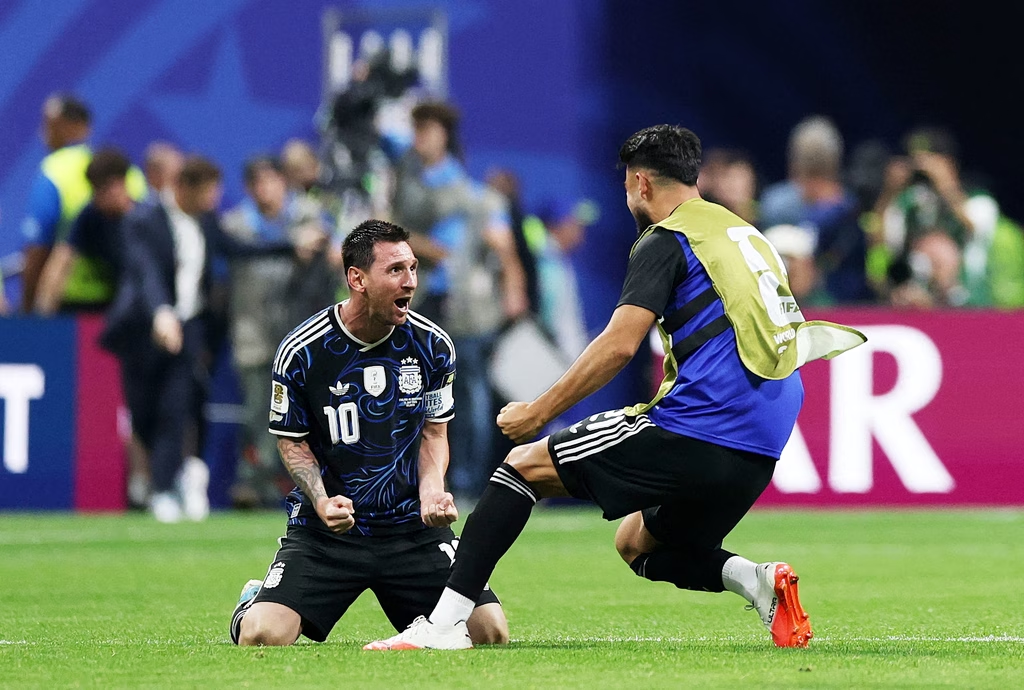
Football is deeply ingrained in Argentina's social fabric, extending beyond mere sport. When the national team plays, the country's rhythm shifts dramatically. Streets become deserted, businesses operate at reduced capacity, and millions reorganize their daily schedules around the 90 minutes of the "Albiceleste" (the national team). This phenomenon, where economic activity noticeably declines during matches, has now been documented through consumption indicators. Researchers have observed a pattern of reduced economic activity coinciding with the national team's games, particularly during the 2022 World Cup. The study highlights that this is not just a temporary disruption but a quantifiable economic impact. The data suggests a significant drop in consumption and commercial transactions during these periods. This effect is amplified when the team performs well, indicating a strong emotional and social connection influencing economic behavior. The findings underscore the immense cultural significance of football in Argentina and its tangible influence on the nation's economic pulse.
The observed economic slowdown during Argentinian national football matches illustrates a powerful interplay between cultural passion and economic activity. This phenomenon highlights how deeply ingrained collective identity and shared emotional experiences can influence consumer behavior and productivity on a national scale. While the immediate impact may seem like a temporary dip, it raises questions about the long-term economic implications of such intense national focus on a single event. Understanding these dynamics is crucial for policymakers and businesses seeking to navigate the economic landscape of societies where cultural events hold significant sway. It suggests that national sentiment can act as a powerful, albeit temporary, economic variable, demonstrating the need for adaptable economic models that account for cultural and social factors.
AI-generated to prompt reflection — not editorial opinion, not advice, not a statement of fact. How this works.