Argentina's Goalkeeper Dibu Martínez: A Decisive Factor in Title Contention
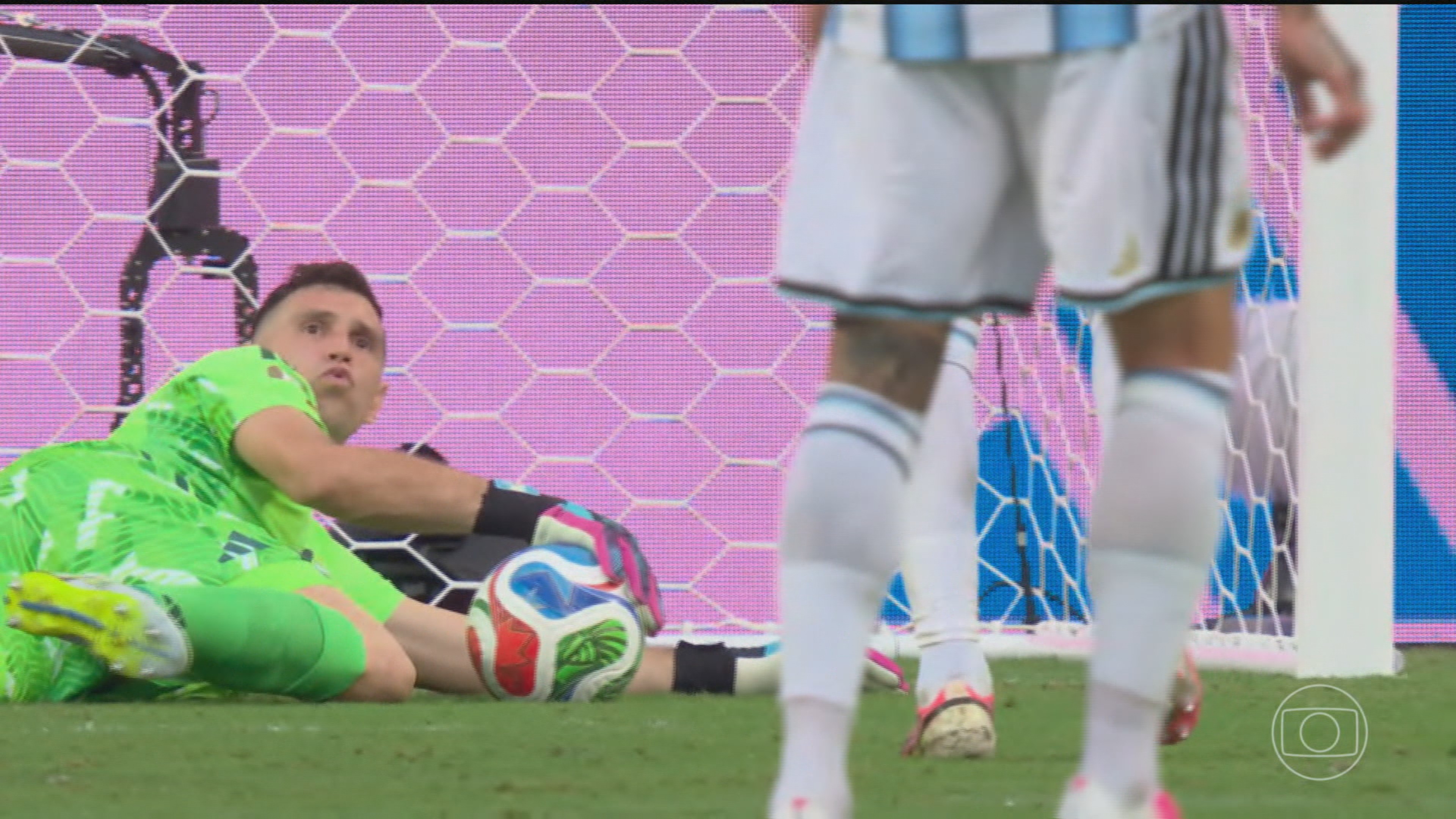
Argentine goalkeeper Emiliano "Dibu" Martínez is highlighted as a crucial element in Argentina's pursuit of titles, particularly noted for his mental game and ability to influence opponents. Ahead of a final match in New York, coach Lionel Scaloni held a press conference, though he did not reveal the starting lineup, citing a shortened training session due to flight delays. Lionel Messi, speaking at a fan event, expressed a desire to play with the joy of a child, free from pressure. Martínez, however, participated in the official pre-final press conference, a superstition stemming from his similar participation before Argentina's 2022 World Cup victory. His performance in that World Cup, including a legendary save against Kolo Muani in the final seconds and his psychological tactics during penalty shootouts, earned him the Golden Glove award and cemented his status as a key figure. Commentators emphasize Martínez's leadership and his skill in managing the emotional aspect of football, which can significantly affect opposing players, especially during penalty kicks. The analysis also briefly touches upon Spain's midfielder Rodri, who is seen as crucial for dictating Spain's rhythm and controlling the game, setting up a potential midfield battle with Argentina.
The narrative surrounding Dibu Martínez emphasizes his psychological impact on opponents, a tactic that has proven effective but also led FIFA to modify rules regarding goalkeeper conduct during penalties. This highlights a tension between individual gamesmanship and the broader integrity of sporting regulations. While Martínez's "mental game" is presented as a strategic advantage, it also raises questions about the balance between competitive spirit and fair play. Future football governance may need to further refine rules to ensure that psychological tactics do not unduly influence outcomes, especially as player performance in high-stakes moments like penalty shootouts becomes increasingly scrutinized in the context of evolving sports psychology and data analytics.
AI-generated to prompt reflection — not editorial opinion, not advice, not a statement of fact. How this works.