Argentina's Milei reignites diplomatic spat with Brazil, calling Lula 'thief' and 'corrupt'
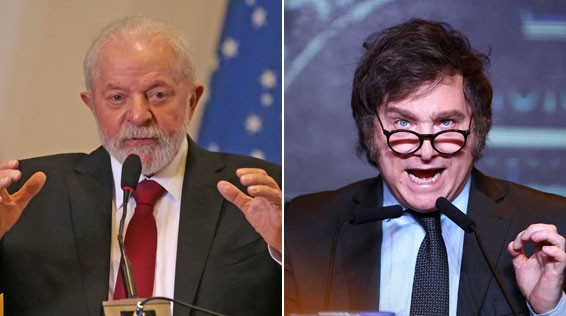
Argentine President Javier Milei has once again directed strong criticism at Brazilian President Luiz Inácio Lula da Silva, labeling him a "thief" and "corrupt" in a recent interview with LN+. Milei also reiterated his doubts regarding the legal decisions that overturned Lula's convictions from the Operation Car Wash investigation, stating that Lula "is not innocent" and was freed due to a "legal process flaw." These remarks escalate an already tense diplomatic situation between the two South American nations.
Last week, Milei had previously called Lula a "thief," "corrupt," "inmate," and "socialist trash" during a political rally in São Paulo. In response, Brazil's Ministry of Foreign Affairs summoned the Argentine ambassador to Brasília, Daniel Raimondi, to formally express the government's displeasure. Concurrently, Brazil's ambassador to Buenos Aires, Julio Bitelli, was called back for consultations. The Brazilian government described the situation as "unprecedented" and "serious," though it currently rules out more severe actions like recalling diplomatic representatives.
Initially, President Lula downplayed Milei's comments, responding with sarcasm when asked about him. However, he later adopted a firmer stance, dismissing Milei's participation in a São Paulo event as a "blunder" and emphasizing that he would not tolerate external interference in Brazil's political processes. Lula stated his preference for maintaining a head-of-state relationship and expressed a desire to respond to "hate" with "love." Milei, in his latest interview, defended his statements as spontaneous and less aggressive than the alleged act of stealing itself, asserting that calling a thief a thief is a mild accusation.
This diplomatic exchange highlights the volatile intersection of domestic political rhetoric and international relations. President Milei's repeated personal attacks on President Lula, framed within a narrative of anti-corruption, appear to serve a domestic audience by reinforcing his outsider, anti-establishment image. Conversely, Brazil's measured, though firm, diplomatic response, including summoning ambassadors, signals a commitment to state-level decorum while implicitly criticizing Milei's approach. The situation underscores the challenge of maintaining stable bilateral ties when leaders prioritize combative personal branding over traditional diplomatic engagement. Future interactions will likely depend on whether this pattern of public antagonism continues, potentially impacting regional economic cooperation and political stability, or if a more conventional diplomatic channel eventually prevails.
AI-generated to prompt reflection — not editorial opinion, not advice, not a statement of fact. How this works.