Argentina's Milei Shares Social Media Posts Criticizing Brazil's Lula
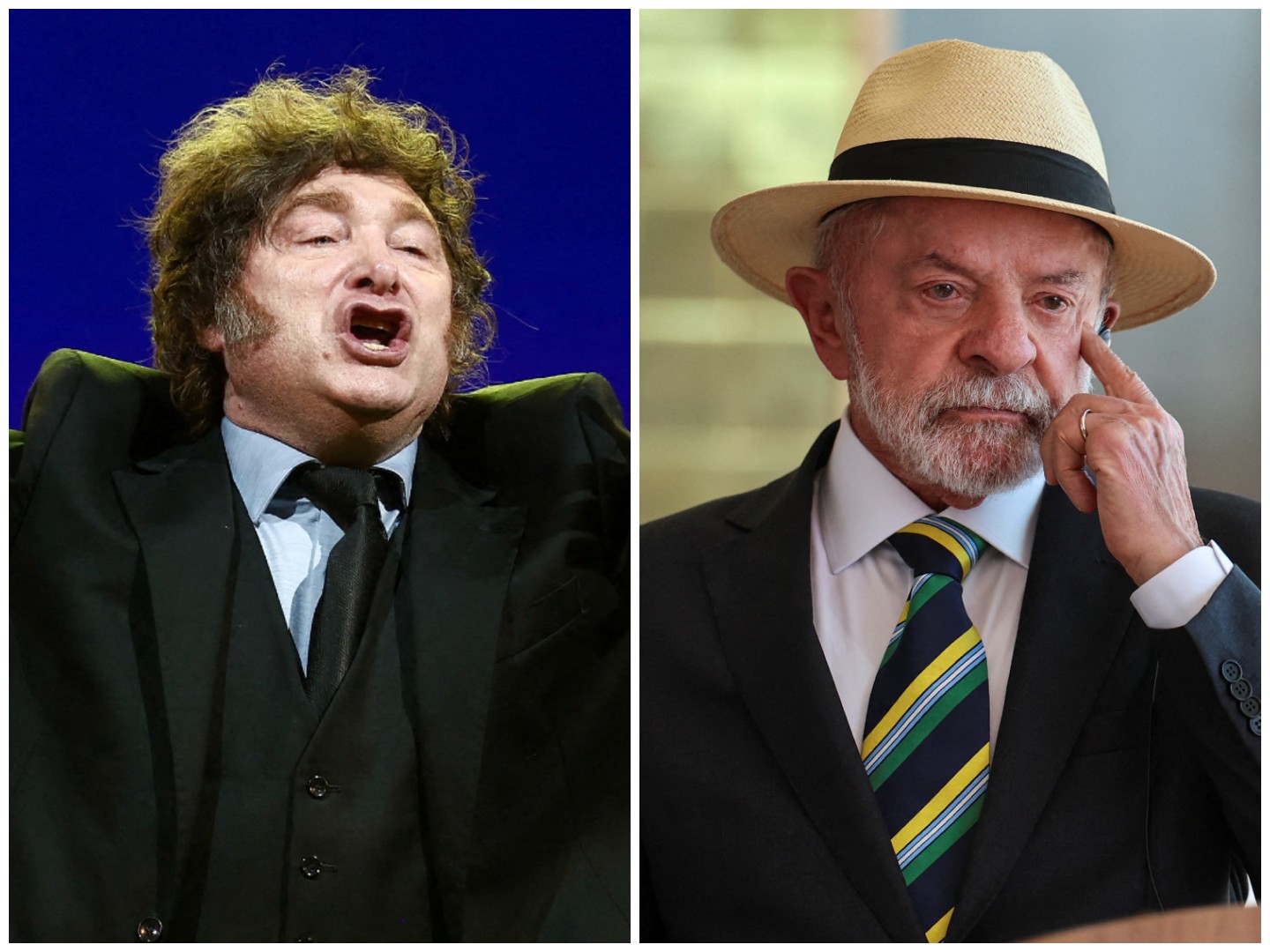
Argentine President Javier Milei amplified criticisms of Brazilian President Luiz Inácio Lula da Silva by sharing several posts on social media platform X on Monday, February 27th. These posts, originally from supporters, accused Lula of interfering in Argentina's 2023 presidential elections by backing then-candidate Sergio Massa, who was defeated by Milei. The shared content also referenced Lula's July 2023 visit to former Argentine President Cristina Kirchner, who is currently under house arrest for corruption charges and is an opponent of Milei. Milei also reposted a statement from the Argentine government, including a radio interview where he labeled Lula a "former convict" and alleged electoral interference. This action occurred amidst a diplomatic crisis that began after Milei's direct attacks on Lula and Supreme Court Justice Alexandre de Moraes during a political convention on Saturday, February 25th. In his speech, Milei called Lula a "convict" and Moraes "bald trash," prompting an immediate response from Brazil's Ministry of Foreign Affairs (Itamaraty). Itamaraty summoned the Argentine ambassador in Brasília for clarification and recalled Brazil's ambassador from Buenos Aires for consultations. Brazilian officials had previously indicated that while Milei's presence at a partisan event was acceptable, any commentary on Brazil's internal affairs would be met with a strong reaction. Minister of Foreign Affairs Mauro Vieira met with the Brazilian ambassador in Buenos Aires on Monday to assess the bilateral relationship, with further discussions planned. Meanwhile, President Lula appeared to downplay the escalating crisis, responding to journalists' questions about the matter by asking, "Who is this guy?"
The exchange between Presidents Milei and Lula highlights the volatile nature of international relations, particularly when amplified by social media. Milei's strategy of reposting critical content, rather than issuing direct statements, leverages supporter engagement while maintaining a degree of plausible deniability regarding the origin of the criticisms. This approach can be seen as a tactic to rally domestic support by projecting an image of strength against perceived foreign interference, a common theme in populist politics. The Brazilian government's response, involving diplomatic summons and ambassadorial consultations, signals a calibrated approach to de-escalate while asserting its sovereignty. The incident underscores the challenge for national leaders in navigating digital public spheres where personal remarks can rapidly escalate into state-level diplomatic incidents, potentially impacting trade and regional stability. Future interactions will likely be shaped by the need for clearer communication protocols and a mutual understanding of the boundaries in public discourse, especially concerning electoral processes and judicial independence.
AI-generated to prompt reflection — not editorial opinion, not advice, not a statement of fact. How this works.