Argentina's President Milei Alleges 'Anti-Argentina Campaign' Linked to World Cup
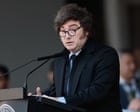
Argentine President Javier Milei has asserted that a coordinated "anti-Argentina campaign" was responsible for negative commentary surrounding the national football team during the recent World Cup. This campaign, he claims, fueled criticism of the team, accusations of racism among fans, and conspiracy theories suggesting favoritism towards Lionel Messi's side by FIFA. Milei extended these accusations beyond the tournament itself, also blaming Brazil and Mexico for allegedly participating in this effort. He stated that online critics involved in this campaign "do not want the ideas of freedom to succeed." The president made these remarks more than a week after Spain secured its second World Cup title, indicating that for him, the implications of the tournament's narrative were still significant.
President Milei's assertions regarding an "anti-Argentina campaign" during the World Cup suggest a narrative framing that may seek to consolidate domestic support by identifying external adversaries. Attributing criticism to coordinated efforts by other nations and political ideologies, such as those opposing "ideas of freedom," could be a strategy to deflect from potential domestic issues or to rally a nationalist sentiment. This approach, while potentially effective in galvanizing a base, risks escalating diplomatic tensions and may overlook the complexities of international public opinion and media discourse, which are often driven by diverse and independent factors rather than singular, orchestrated campaigns. The focus on political ideology in relation to a sporting event highlights a potential tendency to view geopolitical interactions through a highly polarized lens.
AI-generated to prompt reflection — not editorial opinion, not advice, not a statement of fact. How this works.