Argentina's President Milei Skips World Cup Final Due to Superstition
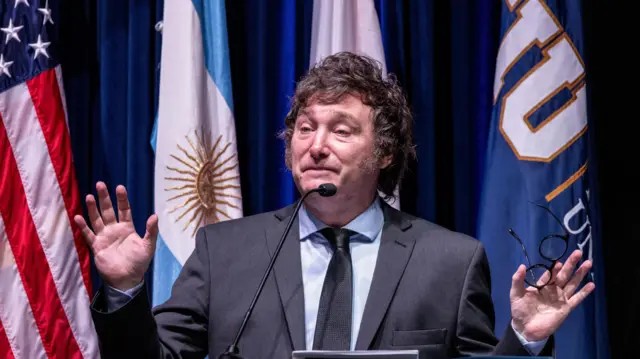
Argentine President Javier Milei will not attend the 2026 World Cup final between Argentina and Spain on Sunday, December 19th, at MetLife Stadium in East Rutherford, New Jersey. His decision stems from a common Argentine superstition known as 'cábala,' a belief that specific rituals bring good luck. Milei stated he will watch the match from Olivos, the presidential residence near Buenos Aires, which he considers part of his lucky ritual. He also revealed another superstitious item: a jacket from the state-owned oil company YPF. He recounted an instance during a match against Switzerland where removing the jacket coincided with an opponent scoring, prompting him to wear it continuously thereafter. While Milei watches from afar, Spain will have royal representation at the final, with King Felipe VI, Queen Letizia, Princess Leonor, and Infanta Sofia expected to attend. Argentina, the current world champion, is aiming for its fourth World Cup title, having previously won in 1978, 1986, and 2022. Spain, conversely, is participating in its second World Cup final, with their sole previous appearance in 2010 resulting in a victory over the Netherlands.
President Milei's decision to forgo attending the World Cup final due to superstitious beliefs highlights the intersection of personal conviction and public leadership. While personal rituals are common, a head of state's adherence to 'cábala' in such a public capacity may reflect broader cultural influences or a strategic choice to connect with national sentiment. From a governance perspective, it underscores the importance of understanding cultural nuances in public communication. In the context of the evolving digital age and increased scrutiny of political figures, such personal choices can be amplified, potentially influencing public perception of leadership pragmatism versus tradition. This event prompts consideration of how leaders balance personal beliefs with the expectations of their office and the broader societal implications of their actions, particularly in moments of national significance.
AI-generated to prompt reflection — not editorial opinion, not advice, not a statement of fact. How this works.