Argentina's Silvana Tenreyro Appointed New IMF Chief Economist
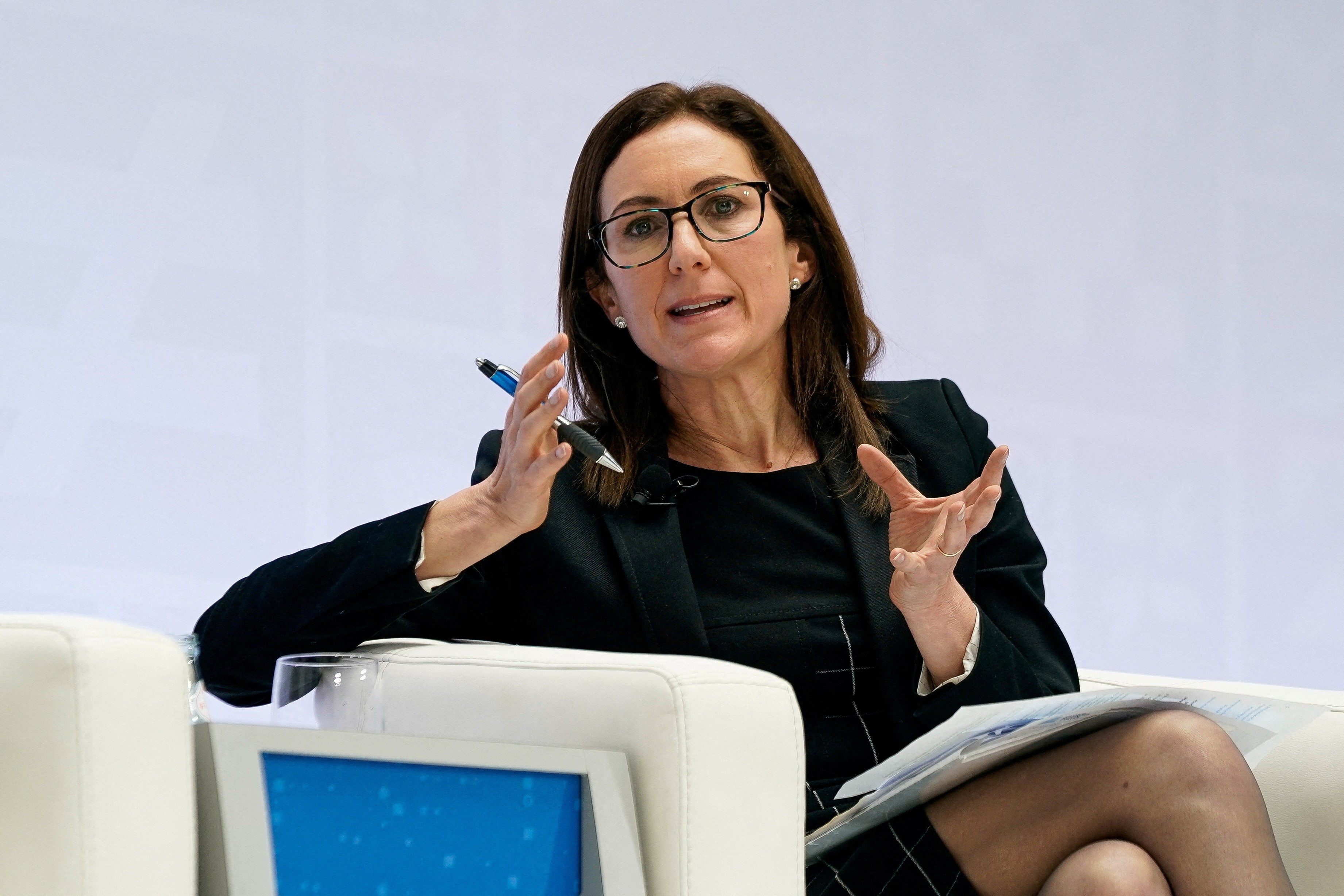
The International Monetary Fund (IMF) has appointed Silvana Tenreyro as its new Chief Economist. The announcement was made on Tuesday, July 7th, by IMF Managing Director Kristalina Georgieva. Tenreyro, who holds Argentine, British, and Italian nationalities, will assume the role of Economic Counselor and Director of the Research Department on August 10th, succeeding Pierre-Olivier Gourinchas. Georgieva highlighted Tenreyro's extensive academic background and experience in public policy formulation, as well as her engagement with international institutions. Tenreyro previously worked at the Federal Reserve Bank of Boston and served as an external member of the Bank of England's Monetary Policy Committee from 2017 to 2023. She also held a position on the Monetary Policy Committee of the Bank of Mauritius earlier in her career. Tenreyro earned her Ph.D. and M.A. in Economics from Harvard University, following her undergraduate studies in economics at the National University of Tucumán in Argentina. She is currently part of the IMF Managing Director's External Advisory Group and advises major public and private institutions on economic and financial matters. Her academic contributions have been recognized with prestigious awards, including the Yrjö Jahnsson Award, the Bernhard Harms Prize, and the Birgit Grodal Award. Tenreyro is a member of several esteemed academic societies, including the British Academy, the Econometric Society, and the Royal Economic Society, and is a Foreign Honorary Member of the American Economic Association. She has also served as President of the European Economic Association.
The appointment of Silvana Tenreyro, an Argentine national with extensive international academic and policy experience, to the IMF's chief economist role signifies a potential emphasis on diverse perspectives in global economic analysis. Her background, including roles at the Federal Reserve Bank of Boston and the Bank of England, suggests a deep understanding of both developed and emerging market economies. In an era of increasing global economic uncertainty and transformation, the IMF's selection points to a strategic need for intellectual leadership that can navigate complex challenges and provide robust policy advice. This move may reflect an institutional recognition of the value of varied economic thought and practical policy engagement in shaping the future of multilateral economic governance.
AI-generated to prompt reflection — not editorial opinion, not advice, not a statement of fact. How this works.