Argentine Fans Transform São Paulo Gas Station into World Cup Viewing Hub
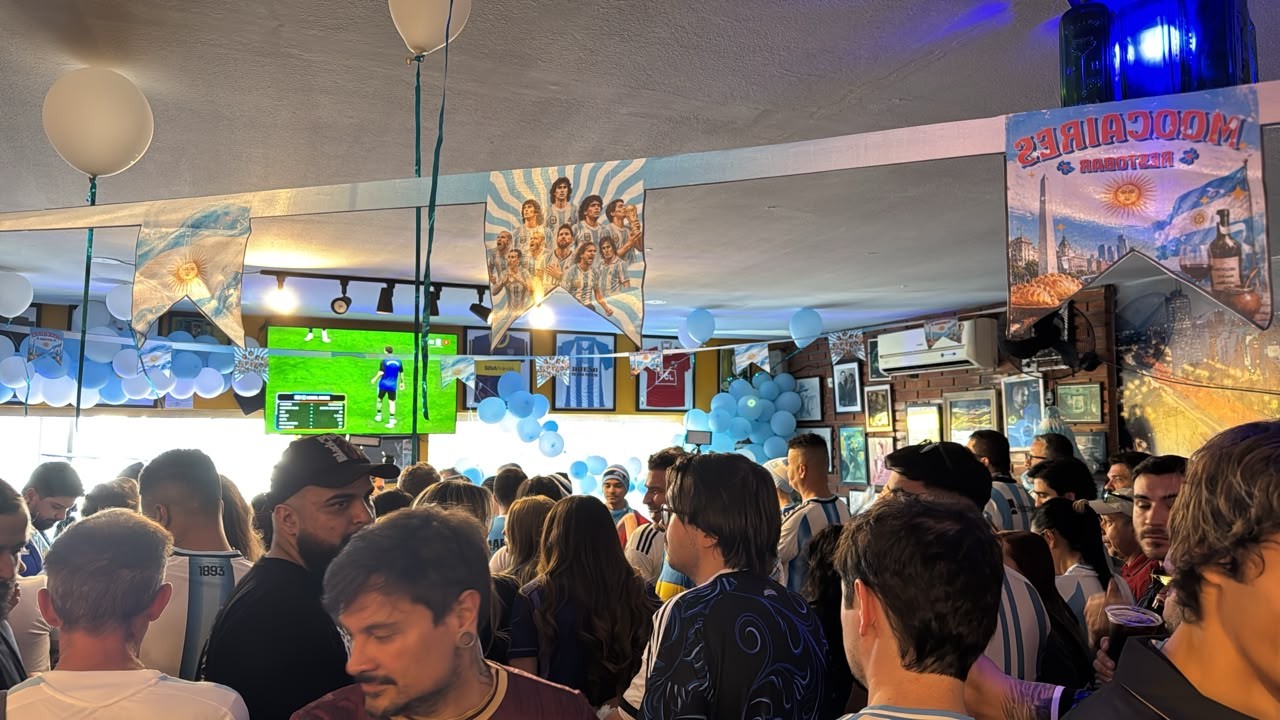
Argentine football fans transformed streets in São Paulo's Mooca district into a vibrant celebration zone during the World Cup semifinals. Unable to secure space at the traditional Moocaires bar, a known hub for Argentine supporters, fans spilled onto the sidewalks and commandeered a nearby gas station as an impromptu viewing area. The corner of Leme da Silva and Mooca streets buzzed with blue and white decorations, giant flags, and team jerseys. A sound system amplified the pre-game atmosphere with Spanish music and chants of "Vamos, Argentina." Vendors sold flags for R$100 and jerseys for R$70-R$80, with one noting that Argentine merchandise had outsold Brazilian items during the tournament. While some paid R$100 for entry into the crowded Moocaires bar to watch the match on a 42-inch television, many opted for the free, open-air experience. This "la previa" gathering, organized by fans since 2014 and gaining momentum after Argentina's 2022 World Cup victory, featured a makeshift barbecue offering Argentine cuts like picanha and maminha for R$50. The festivities were briefly interrupted by police and city officials who seized goods from street vendors, but the celebration quickly resumed as the match began. The Moocaires bar, established in 2007, has become a significant gathering place for Argentine fans in São Paulo, but on World Cup match days, its influence extends beyond its walls, creating a temporary piece of Buenos Aires in the Mooca neighborhood.
This event highlights the powerful role of shared cultural experiences, particularly in sports, in fostering community and economic activity. The spontaneous expansion of fan celebrations from a traditional venue to public spaces and even private businesses like a gas station demonstrates the adaptive capacity of fan culture to overcome physical and financial barriers. The economic dynamic is clear: demand for communal viewing and associated merchandise/food creates opportunities for vendors and businesses. However, the intervention by authorities underscores a common tension between public order, informal commerce, and regulated business operations. Future urban planning and event management could explore ways to better accommodate and integrate such organic community gatherings, potentially formalizing spaces or creating designated zones that balance public enjoyment with safety and regulatory compliance, thereby harnessing the positive energy of these events while mitigating potential disruptions.
AI-generated to prompt reflection — not editorial opinion, not advice, not a statement of fact. How this works.