Argentinians Celebrate World Cup Final Berth in Patagonia City Featuring 26-Meter Messi Statue
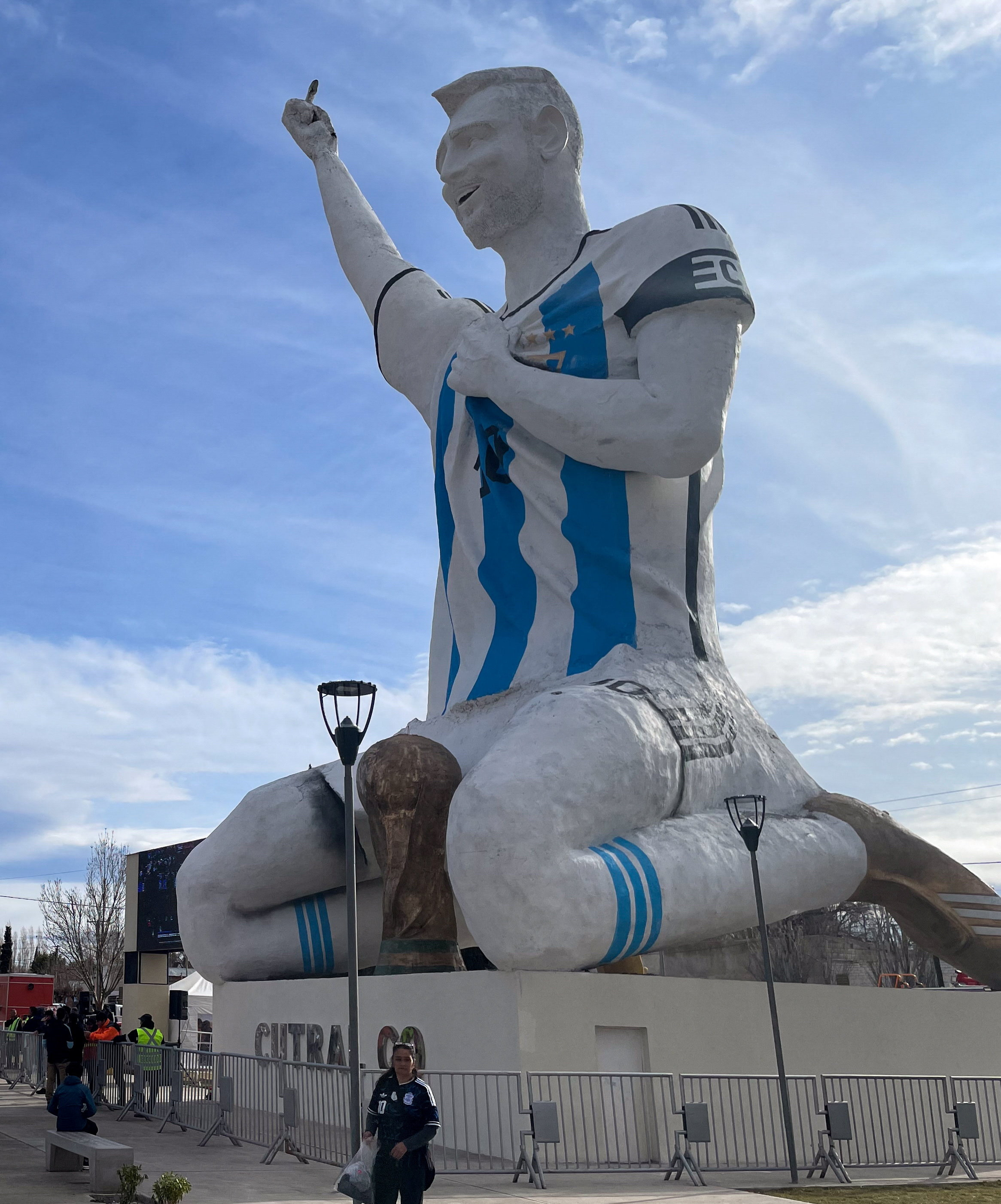
Argentinians erupted in celebration across the country, including in a Patagonian city adorned with a 26-meter statue of Lionel Messi, following their national team's victory over England and qualification for the World Cup final. The win secured Argentina's place in the championship match, where they will face Spain, aiming for their second consecutive World Cup title, a feat not achieved since 1962. In Cutral Co, a town of approximately 40,000 in Neuquén province known for its oil and gas industry, around 300 residents gathered to watch the semifinal on a large screen near the colossal Messi monument. The atmosphere was electric as the referee signaled the end of the match, which Argentina won 2-1 after trailing initially. Local resident Lucas Romero, 32, described the victory as hard-fought and called the Messi statue a deserved tribute to the player's achievements. The monument, unveiled in June and created by local artist Aldo Beroisa, depicts Messi kneeling, smiling, and pointing skyward, reportedly the largest statue dedicated to the footballer. While initial World Cup 2026 sentiments in Argentina were more relaxed than in 2022, the team's progress and dramatic wins have heightened national tension and excitement, leading to widespread street celebrations. Cardiologists even issued warnings about potential heart issues among fans due to the stress of closely contested matches. In Buenos Aires, streets emptied during the game but filled with jubilant crowds and honking cars after the final whistle, with fans expressing overwhelming emotion and pride in the team's resilience.
The widespread public jubilation and the erection of monumental tributes like the 26-meter Messi statue highlight the profound cultural significance of football in Argentina, serving as a powerful unifying force. This event underscores the complex interplay between national identity, sporting success, and collective emotional expression, particularly in regions like Patagonia, which may seek to leverage such cultural touchstones for broader recognition. As global sporting events continue to capture mass attention, the infrastructure and societal focus surrounding them will likely intensify, presenting both opportunities for community engagement and potential challenges related to managing intense public sentiment and its impact on public health and social cohesion. The narrative of overcoming adversity, both on the field and in the broader national context, resonates deeply, suggesting that future national projects might draw inspiration from such displays of resilience and collective aspiration.
AI-generated to prompt reflection — not editorial opinion, not advice, not a statement of fact. How this works.