Armed Group Allegedly Invades Acre Indigenous Land, Prompting Security Operation
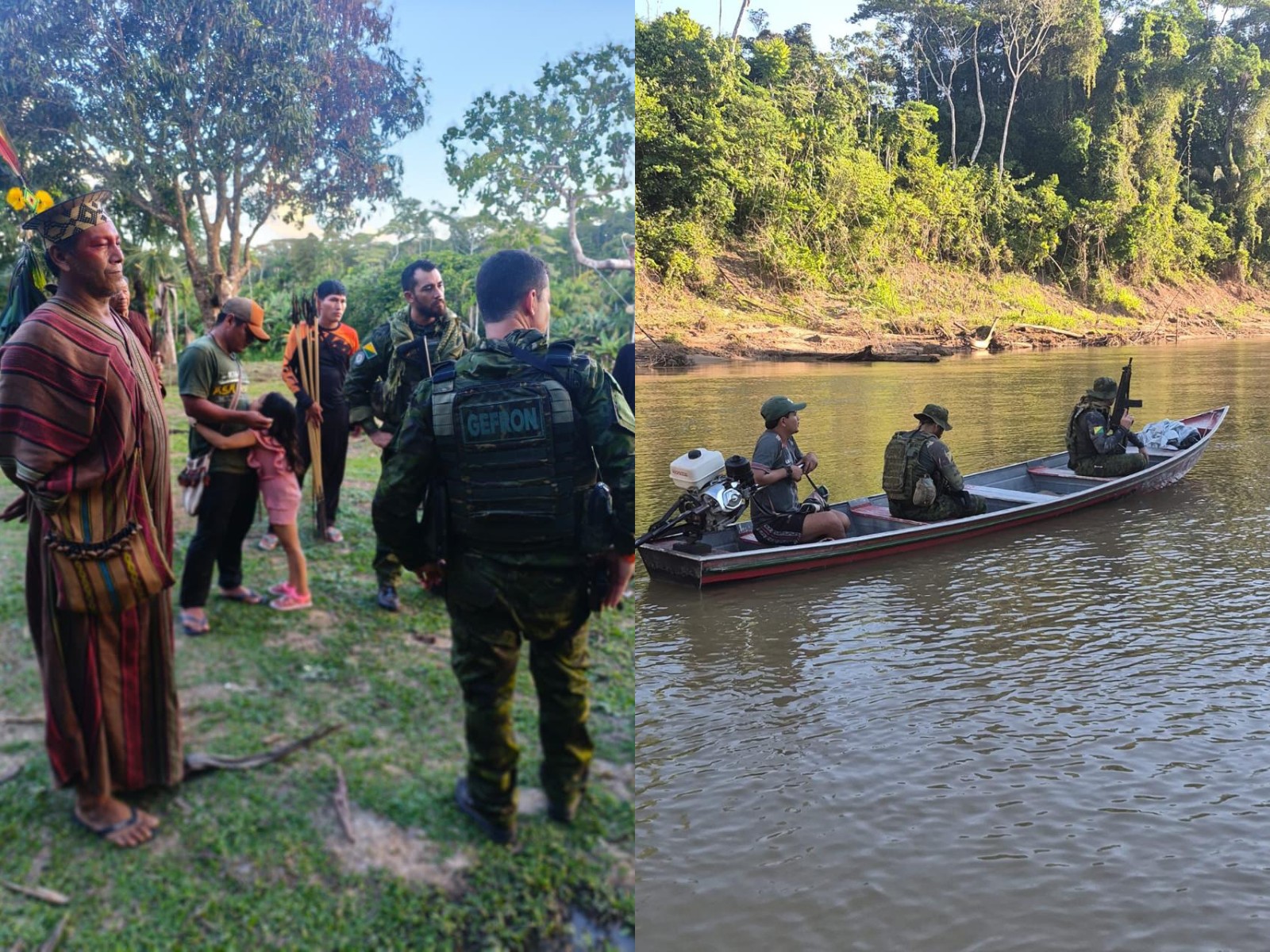
An operation was launched on July 7th in the Ashaninka Indigenous Territory (TI) in Acre, Brazil, following reports of an armed group invading and threatening residents of the Apiwtxa Village. The alleged invasion and threats occurred on July 5th and 6th, reportedly in response to restrictions placed on non-indigenous access to the region's indigenous lands. Leaders cited high rates of drug trafficking, illegal deforestation, and mining as reasons for these restrictions. Francisco Piyãko, one of the leaders, described the situation as "a moment of great tension here due to the scenario, the context of invasion of our territory." The State Secretariat of Public Security (Sejusp) dispatched agents from the Special Border Security Group (Gefron) via helicopter, with rural and riverine patrols, including indigenous support, commencing on July 7th. A second team arrived on July 9th, and agents met with indigenous leaders. The Sejusp is coordinating with federal agencies and the Federal Public Ministry (MPF-AC). Elements of the Brazilian Army have also joined the operation, which includes riverine patrols extending to Marco 40 on the Peruvian border to ensure authorized access to the territories. No arrests have been made as of the report.
This incident highlights the ongoing challenges in balancing indigenous land rights with security concerns in remote border regions. The reported motivations for the alleged invasion, stemming from restrictions aimed at curbing illegal activities like drug trafficking and environmental destruction, suggest complex interdependencies between external threats and indigenous governance. The deployment of state security forces, including army participation, indicates a governmental response to perceived territorial integrity violations and potential cross-border illicit activities. Future considerations should involve strengthening collaborative security frameworks and sustainable development initiatives that address the root causes of conflict, ensuring the protection of indigenous territories while respecting their autonomy and environmental stewardship.
AI-generated to prompt reflection — not editorial opinion, not advice, not a statement of fact. How this works.