Armenian Apricots Caught in Geopolitical Crossfire, Farmers Suffer
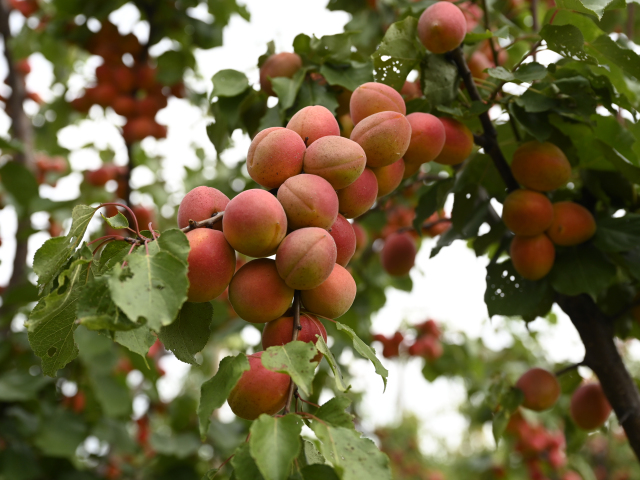
Apricots from Armenia's Ararat Valley, renowned globally, have unexpectedly become entangled in the geopolitical conflict between Russia and the West. This year's harvest is now a casualty of the dispute, impacting local farmers. The region, situated near Mount Ararat, is famous for its high-quality apricots, a significant agricultural product for the area. The conflict's ripple effects are directly affecting the livelihoods of Armenian farmers who rely on these crops for income. The situation highlights how international political tensions can have tangible consequences on local economies and agricultural sectors. Farmers are facing uncertainty regarding the sale and export of their produce due to the broader geopolitical climate. The famous apricots are now a symbol of how distant conflicts can disrupt even seemingly unrelated local industries.
The situation in Armenia's Ararat Valley illustrates how agricultural commodities can become vulnerable to geopolitical tensions. The entanglement of apricot exports in the Russia-West conflict suggests that trade routes and market access are increasingly subject to political leverage. This dynamic underscores the systemic risk inherent in supply chains that are heavily influenced by international relations. Future agricultural trade may require more robust diversification strategies and risk management protocols to mitigate the impact of such external shocks. The economic stability of regions reliant on specific exports could be significantly challenged by evolving global political landscapes, necessitating adaptive economic policies.
AI-generated to prompt reflection — not editorial opinion, not advice, not a statement of fact. How this works.