Art Market Divergence: Auctions Thrive While Galleries Contract
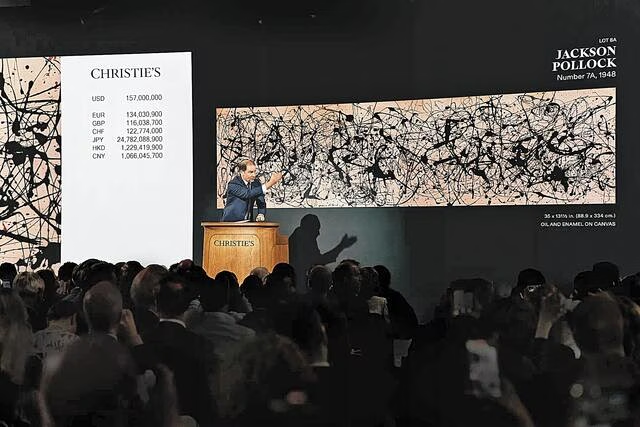
The art market is experiencing a significant divergence, with auction houses enjoying a strong season that suggests a spring for the art market. This positive trend for auctions contrasts sharply with the situation faced by art galleries, which are reportedly shrinking. The success of auctions indicates robust demand and potentially higher price points for artworks being sold through this channel. However, the contraction of galleries suggests a different set of challenges within the primary art market. This could be due to shifting collector preferences, increased operational costs for galleries, or a greater reliance on the secondary market facilitated by auctions. The disparity highlights a complex and evolving landscape for art sales and consumption.
The art market's bifurcation between thriving auction houses and contracting galleries points to evolving collector behavior and market dynamics. Auction houses benefit from the transparency and competitive bidding that can drive prices, particularly for established or high-profile works. Galleries, often operating on tighter margins and focused on nurturing emerging artists or building long-term client relationships, may be struggling with overheads or adapting to digital sales channels. This trend could indicate a market increasingly favoring immediate liquidity and public price discovery over the curated, relationship-driven model of traditional galleries. Over the next decade, the integration of digital platforms and AI-driven curation will likely further reshape these structures, potentially creating new hybrid models or exacerbating existing disparities.
AI-generated to prompt reflection — not editorial opinion, not advice, not a statement of fact. How this works.