Artificial Cell Achieves Limited Cell Division
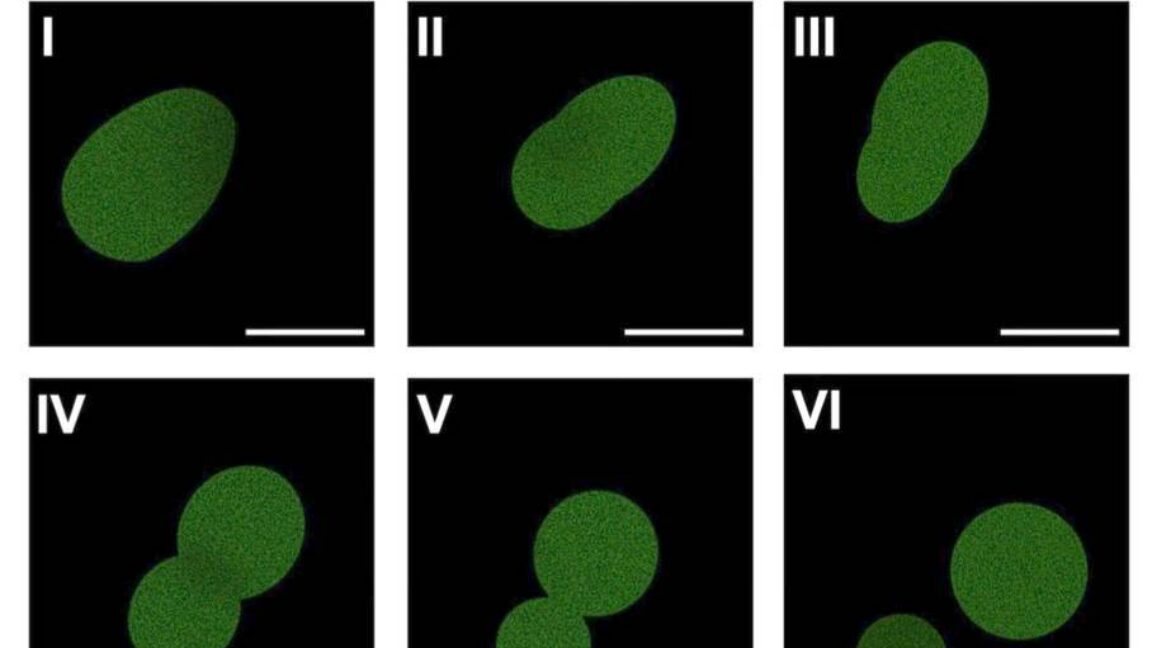
Scientists have developed an artificial cell capable of undergoing a few rounds of cell division. This groundbreaking achievement marks a significant step in the field of synthetic biology. However, the artificial cell's ability to divide is currently limited and requires the addition of substantial materials to sustain the process. The researchers acknowledge that further development is needed to enhance the efficiency and duration of cell division in these synthetic constructs. This work opens new avenues for understanding fundamental biological processes and for potential applications in medicine and biotechnology. The current limitations highlight the complexity of replicating natural cellular functions. Future research will likely focus on optimizing the internal environment and resource supply within the artificial cells. The goal is to achieve more robust and sustained division, mimicking natural cell behavior more closely.
The development of an artificial cell capable of division, even for a limited number of cycles, represents a significant advancement in synthetic biology. While the current reliance on numerous added materials indicates a substantial gap between this artificial system and natural cellular replication, it provides a valuable platform for studying the fundamental requirements of cell division. Future research in this area could explore more efficient methods for self-sustenance and division, potentially reducing external dependencies. This could have long-term implications for bio-engineering, drug delivery systems, and understanding the origins of life by providing insights into the minimal components necessary for cellular replication.
AI-generated to prompt reflection — not editorial opinion, not advice, not a statement of fact. How this works.