Artificial Insemination Training for Bees Aims to Improve Honey Production
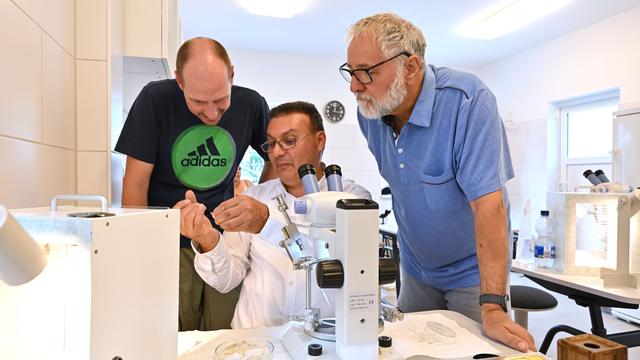
A specialized training course is teaching beekeepers the technique of artificial insemination for honeybees. This advanced method involves collecting semen from male bees (drones) and using it to inseminate queen bees. The primary goal of this practice is to enhance the genetic quality of bee colonies, which in turn is expected to lead to improved honey production and overall colony health. Participants in the course learn the precise procedures and necessary equipment for successful artificial insemination. This technique allows for controlled breeding, enabling beekeepers to select drones with desirable traits and queens with superior characteristics. By carefully managing the genetics of their bee populations, beekeepers aim to create more robust and productive colonies. The training emphasizes the scientific approach to beekeeping, moving beyond traditional methods to incorporate modern biotechnological tools. Ultimately, the initiative seeks to address challenges faced by bee populations, such as disease susceptibility and declining productivity, through strategic genetic improvement.
The development of artificial insemination techniques for honeybees represents a significant technological advancement in apiculture. This method allows for precise genetic selection, potentially leading to more resilient and productive bee colonies. Such advancements could offer a strategic response to the global challenges impacting bee populations, including disease and environmental stressors. By enabling controlled breeding, beekeepers can proactively improve colony health and honey yields, aligning with the increasing demand for sustainable agricultural practices. This approach highlights the intersection of biotechnology and traditional farming, offering a glimpse into future agricultural systems that rely on data-driven genetic management for enhanced efficiency and sustainability.
AI-generated to prompt reflection — not editorial opinion, not advice, not a statement of fact. How this works.