Artisan Alleges Months of Poisoning by Student, Mercury Confirmed in Water
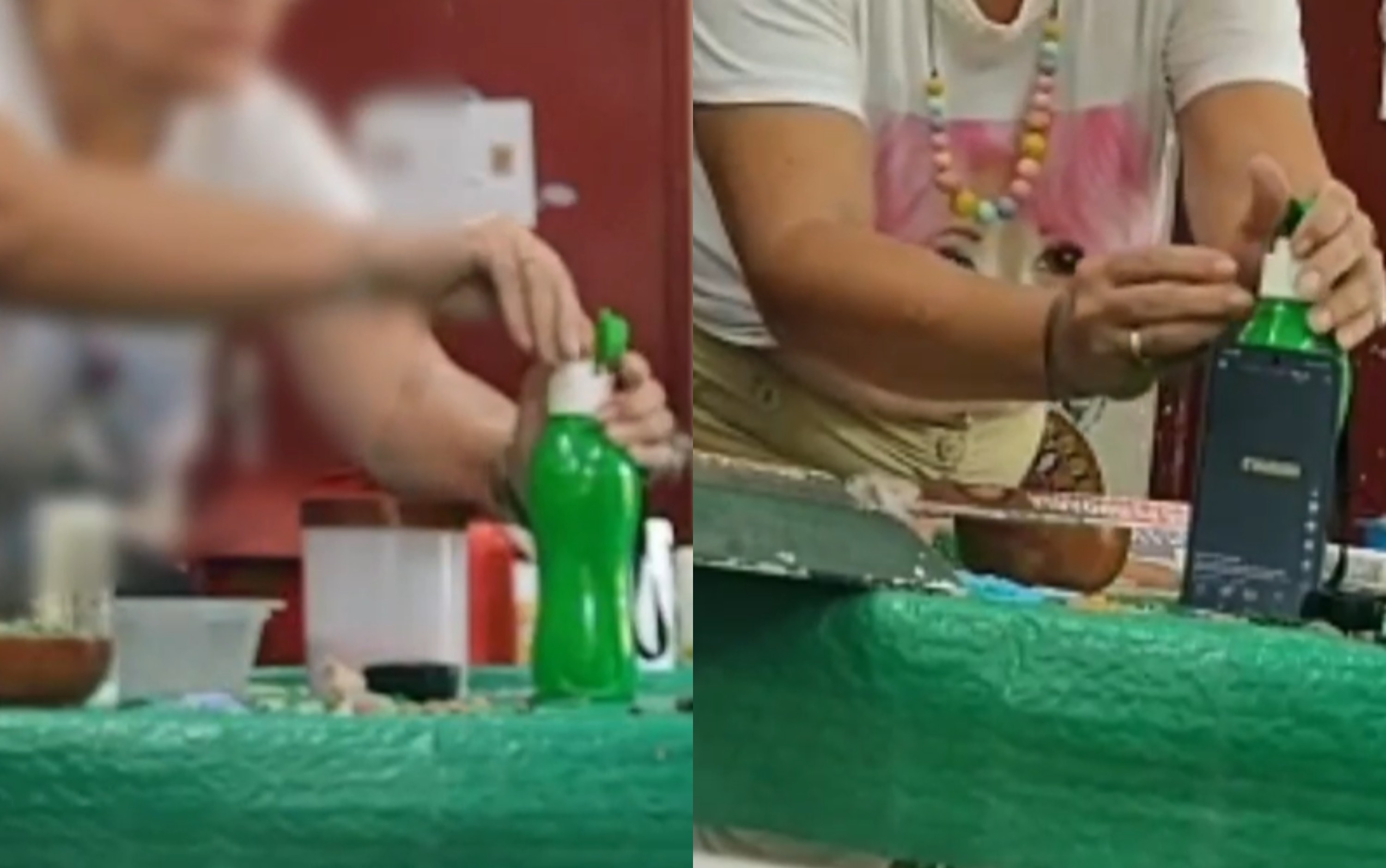
An artisan in Santo Amaro, Recife, Brazil, has accused a student of poisoning her with mercury for over six months. The victim, who requested anonymity, claims the student, identified as Maria Aparecida Rodrigues de Araújo, repeatedly placed mercury into her water bottle. The artisan, who taught at the 'Arte na Medicina' social project for over a decade, began experiencing severe intoxication symptoms in the second half of 2024, including abdominal pain, muscle stiffness, and difficulty walking and urinating. Initially suspecting fibromyalgia, she became suspicious after noticing unusual behavior and what felt like small particles in her water. She captured footage of the student allegedly contaminating her bottle on two occasions in May 2025. Following these incidents, the artisan reported the matter to the police, leading to an investigation by the Civil Police that has been ongoing for over a year. Toxicological tests confirmed 21 micrograms of mercury per milliliter of blood in the victim, and lab analysis of the water bottle also detected the metal. Medical reports suggest the poisoning occurred over an eight-month to one-year period. The artisan continues to suffer from neurological damage, including reduced motor coordination and spinal cord compression, and requires ongoing treatment. She is currently awaiting a crucial neurosurgery consultation through the public health system (SUS), which she has been trying to schedule since January. Her lawyer has filed a lawsuit to compel the state to provide urgent medical care, as she cannot afford private treatment. The investigation into the student's alleged actions is still pending, and the police have not disclosed the specific charges being investigated.
This case highlights the critical need for robust investigative processes and timely access to healthcare within public systems. The alleged prolonged poisoning, confirmed by scientific evidence, raises questions about the effectiveness of preventative measures and the speed of justice. The victim's ongoing health struggles and the delay in accessing specialized medical care underscore systemic challenges in public health provision, particularly for victims of severe harm. Future considerations should include mechanisms for expedited medical and legal support in cases involving confirmed toxic exposure and potential criminal intent, ensuring that victims receive necessary treatment and that investigations are concluded efficiently to prevent further harm and uphold accountability.
AI-generated to prompt reflection — not editorial opinion, not advice, not a statement of fact. How this works.