Artisans and companies in São Paulo's interior turn waste into income
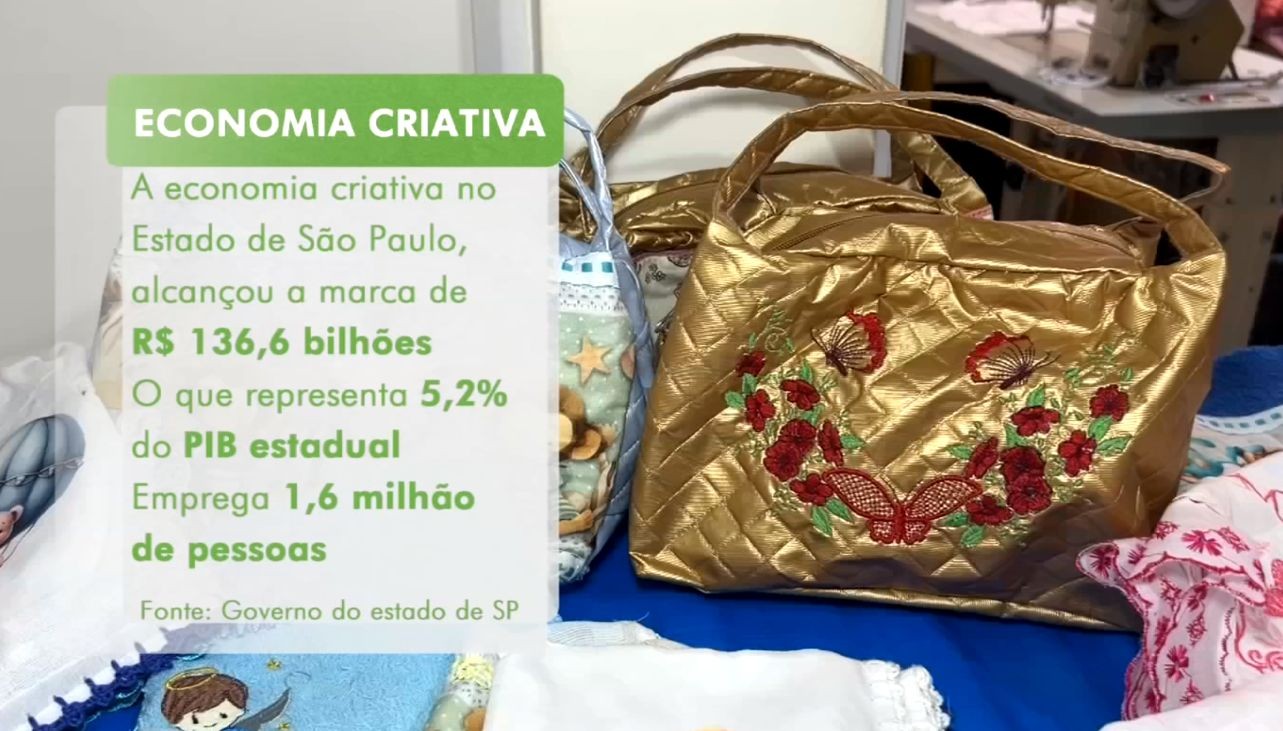
In São Paulo, Brazil, artisans and businesses are embracing creative and circular economy principles to transform discarded materials into profitable ventures. Patrícia Regina Dejavit, an artisan in Bauru for two decades, relies on her craft for approximately 70% of her income, creating items like baby linens, rugs, and scarves. Her work, and that of countless others, contributes significantly to Brazil's national economy, generating billions of reais and employing thousands. Meanwhile, the concept of a circular economy emphasizes waste reduction and reuse, benefiting both consumers and the environment. In São José do Rio Preto, Jhennifer Trindade exemplifies this by repurposing materials such as clay tiles, old crate lids, and coconut shells into unique decorative pieces and kitchenware. Her artistic talent, inherited from her father, allows her to find beauty and potential in what others discard, turning salvaged wood and fallen branches into sculptures. Ernestina Maria Campreghener, a 75-year-old retiree, tackles plastic waste by transforming an estimated 70 to 80 plastic bags into colorful bags, tablecloths, and cushions, ensuring nothing goes to landfill. In Botucatu, a local company, led by entrepreneur Fabíola Ensinas Rojas, innovates by creating new products from textile industry scraps and remnants. These materials, deemed unusable for large-scale production, are fashioned into items like laundry baskets, bags, and children's gardening kits. To ensure the gardening kits are fully sustainable, they are paired with organic compost from a partner company, Júlio Pinhel's composting business, which closes the loop on food waste by turning organic matter into fertilizer that returns to the earth to grow more food. These combined efforts demonstrate a powerful model for resource recovery and minimal environmental impact.
This initiative highlights the growing intersection of creative enterprise and environmental stewardship, demonstrating how economic activity can be decoupled from resource depletion. By reframing waste as a valuable input, these artisans and businesses not only generate income but also contribute to a more sustainable consumption model. The success of these ventures suggests a potential pathway for broader economic development that prioritizes resource efficiency and ecological regeneration. Future challenges may involve scaling these circular models, ensuring fair labor practices within the artisan sector, and navigating market dynamics that often favor linear, disposable production. The integration of technology, such as AI for material sorting or design optimization, could further enhance the efficiency and reach of such circular economy initiatives.
AI-generated to prompt reflection — not editorial opinion, not advice, not a statement of fact. How this works.