Assassination of Khamenei: A Strategic Miscalculation for Trump and Netanyahu
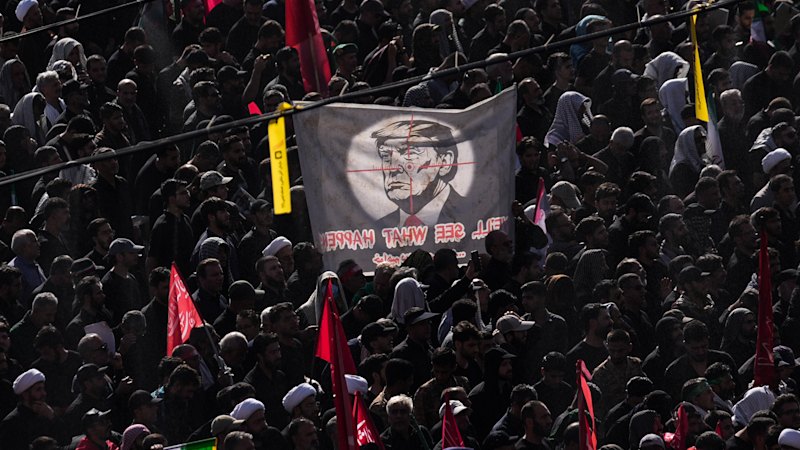
The assassination of Qasem Soleimani, orchestrated by the Trump administration and Israel, was intended to spark a democratic uprising in Iran. However, the operation did not achieve its desired outcome. Instead of leading to the downfall of the regime, the killing of Soleimani, a prominent Iranian general, resulted in a significant generational shift within Iran. Furthermore, the event served to reinforce the existing regime's narrative and consolidate its power. The strategic miscalculation highlights a misunderstanding of the internal dynamics and societal responses within Iran. The intended consequence of weakening the Iranian government was not realized, suggesting a flawed assessment of the potential repercussions and the Iranian public's reaction.
The strategic decision to assassinate Qasem Soleimani, purportedly aimed at destabilizing the Iranian regime and fostering democratic change, appears to have had unintended consequences. Rather than triggering an uprising, the event may have inadvertently strengthened the regime's narrative and facilitated a generational transition that could reinforce existing power structures. This outcome suggests a potential disconnect between external perceptions of Iranian society and its internal political realities. Future geopolitical strategies in the region may need to account for the complex interplay of nationalistic sentiment, regime consolidation, and the potential for unexpected generational dynamics, moving beyond simplistic assumptions about regime collapse.
AI-generated to prompt reflection — not editorial opinion, not advice, not a statement of fact. How this works.