Assembly's Proactive Role Crucial for Successful EU Accession
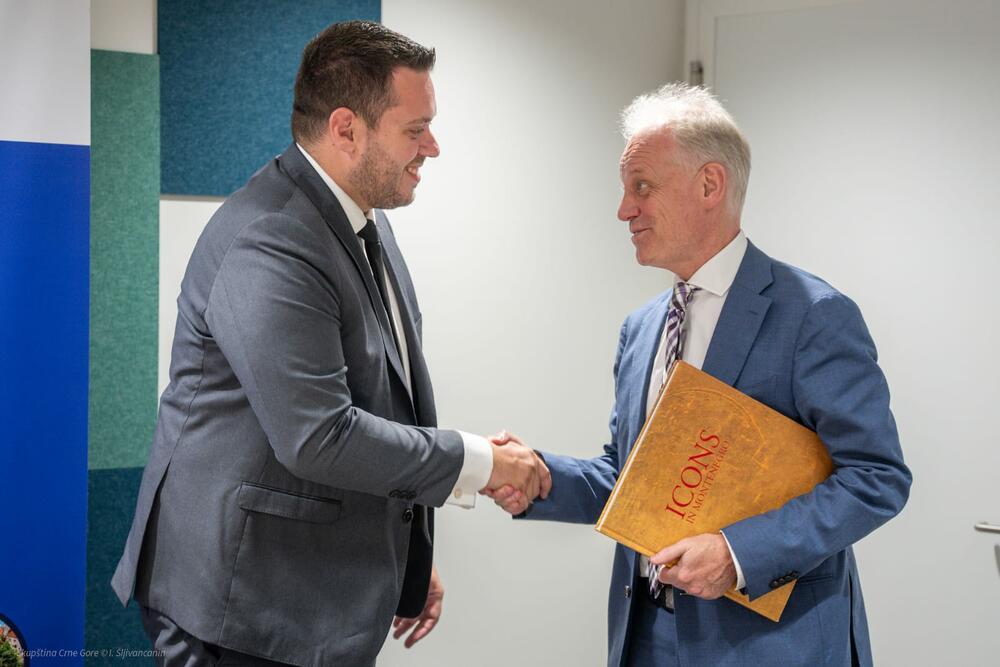
The proactive role of the Assembly is deemed essential for the successful completion of Montenegro's accession process to the European Union. This was emphasized during a meeting between the President of the Assembly, Andrija Mandić, and the Director-General for Neighbourhood and Enlargement Negotiations at the European Commission, Gert Jan Koopman. The discussions focused on the current stage of Montenegro's EU integration and the necessary steps to be taken. Mandić highlighted the commitment of the Montenegrin Parliament to fulfilling all obligations and accelerating reforms required for membership. Koopman acknowledged the efforts made by Montenegro and reiterated the EU's support for the country's European path. He stressed the importance of continued political will and concrete results in key areas such as the rule of law and economic development. The meeting underscored the need for close cooperation between Montenegrin institutions and the European Commission to overcome remaining challenges. Both parties agreed on the significance of the Assembly's legislative and oversight functions in driving the reform agenda forward. The dialogue aimed to ensure that Montenegro remains on track for timely accession, with a clear roadmap and mutual understanding of responsibilities.
The emphasis on the Assembly's proactive role in EU accession highlights the critical intersection of legislative action and executive implementation in candidate countries. This dynamic reflects a broader trend where parliamentary oversight and the capacity to enact necessary reforms are increasingly scrutinized by bloc institutions. As the EU navigates its own internal dynamics and external geopolitical pressures, the efficiency and responsiveness of candidate parliaments will be a key determinant of accession timelines. The interaction between Montenegrin officials and the European Commission underscores the importance of institutional dialogue in aligning national policies with EU standards, a process that will continue to shape governance structures and economic policies in the Western Balkans over the next decade.
AI-generated to prompt reflection — not editorial opinion, not advice, not a statement of fact. How this works.