Assistive Robots Enhance Workforce Inclusivity by Enabling Remote Operation
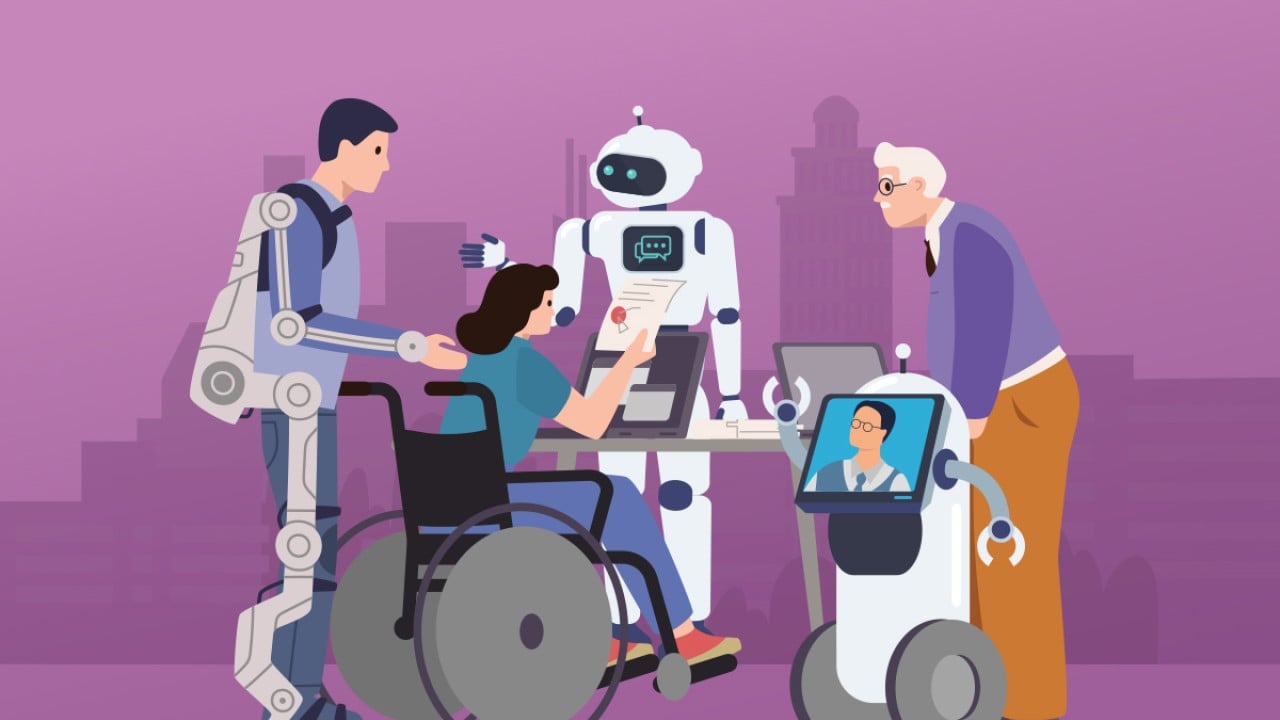
Businesses are increasingly integrating assistive robots, often referred to as telepresence or avatar robots, into sectors like hospitality to foster a more inclusive workforce. These robots allow individuals with mobility disabilities to remotely control and operate the machines, thereby participating in the workforce. The operator's face is displayed on the robot's screen, which helps maintain a human connection and promotes a sense of inclusion for both the operator and those interacting with the robot. This innovative approach enables people with disabilities to navigate and perform tasks in environments that might otherwise be inaccessible. The technology aims to bridge gaps in employment opportunities by leveraging robotics to overcome physical limitations.
The deployment of assistive robots presents a technological solution to enhance workforce inclusivity by mitigating physical barriers for individuals with disabilities. This approach leverages automation to create new roles and opportunities, shifting the focus from physical presence to operational capability. Such innovations highlight the evolving nature of work in the AI era, where human-robot collaboration can redefine accessibility and productivity. Businesses adopting these technologies may benefit from a broader talent pool and improved diversity metrics, while also potentially facing challenges related to implementation costs, training, and ensuring equitable access to the technology itself. The long-term impact will depend on how effectively these systems are integrated into existing organizational structures and societal support frameworks.
AI-generated to prompt reflection — not editorial opinion, not advice, not a statement of fact. How this works.