Asteroid Impacts May Have Catalyzed Life's Origin on Early Earth
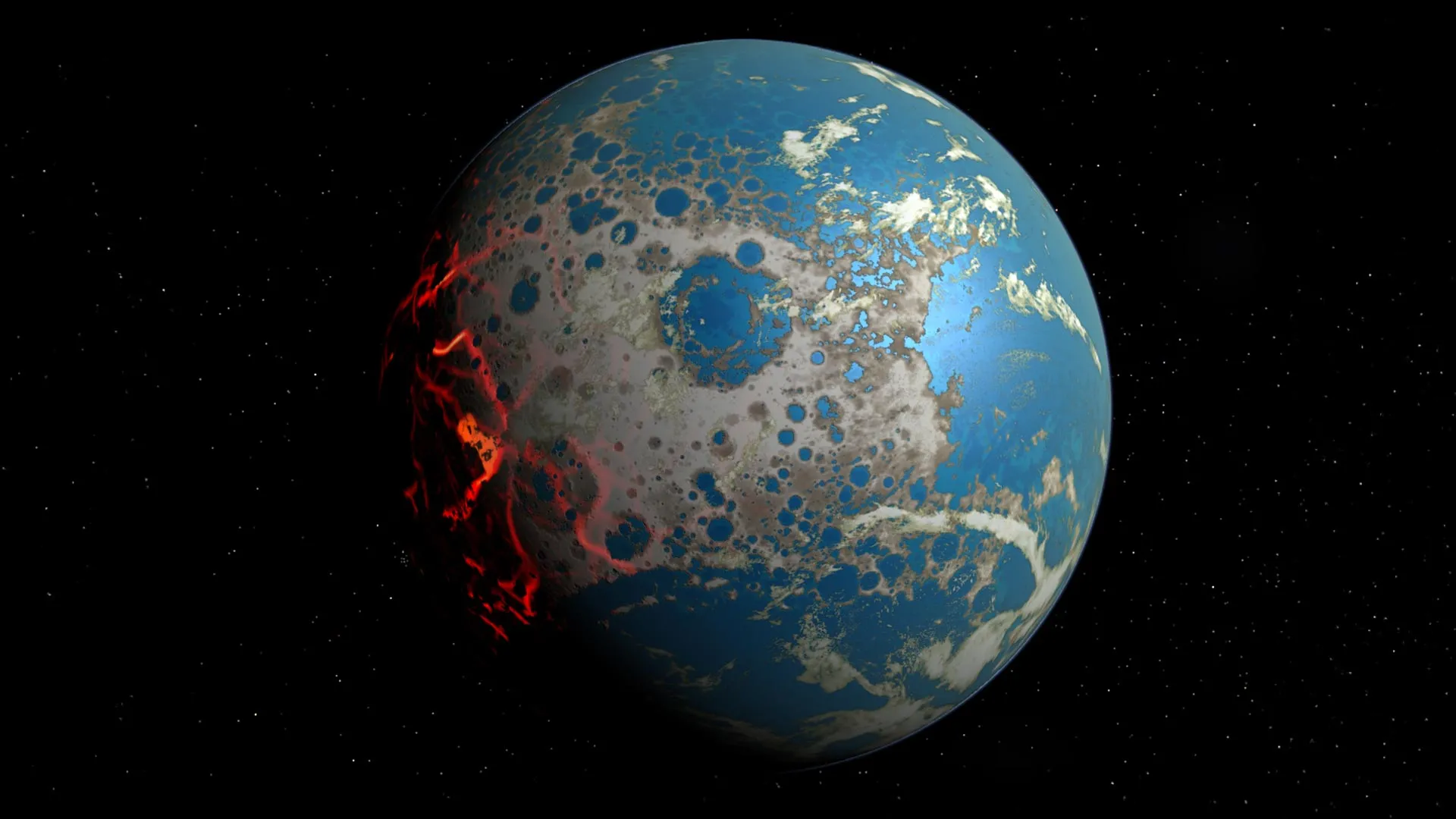
New computer models suggest that ancient asteroid impacts played a crucial role in the emergence of life on Earth. These collisions are now thought to have generated extensive underground hydrothermal systems. The impacts fractured the planet's crust, enabling hot water to circulate through the subsurface. These newly formed, long-lasting environments, conducive to life, may have been widespread across the early Earth. This research proposes that what was once considered a destructive cosmic event could have provided the necessary conditions for life to begin. The findings offer a novel perspective on the origins of life, linking extraterrestrial impacts to the planet's habitability.
This research reframes asteroid impacts not merely as destructive geological events but as potential catalysts for abiogenesis. By modeling the creation of subsurface hydrothermal systems, the study highlights how planetary engineering on a cosmic scale could have established early Earth's habitability. This perspective challenges traditional notions of life's origins, suggesting that external forces, rather than purely internal terrestrial processes, may have been critical. Examining these early Earth dynamics through the lens of planetary science and astrobiology offers a framework for understanding the conditions necessary for life's emergence, both on Earth and potentially on other celestial bodies. The long-term implications involve understanding the interplay between celestial mechanics and biological evolution across geological timescales.
AI-generated to prompt reflection — not editorial opinion, not advice, not a statement of fact. How this works.