Astronomers Bypass James Webb Limit to Uncover Early Galaxy Secrets
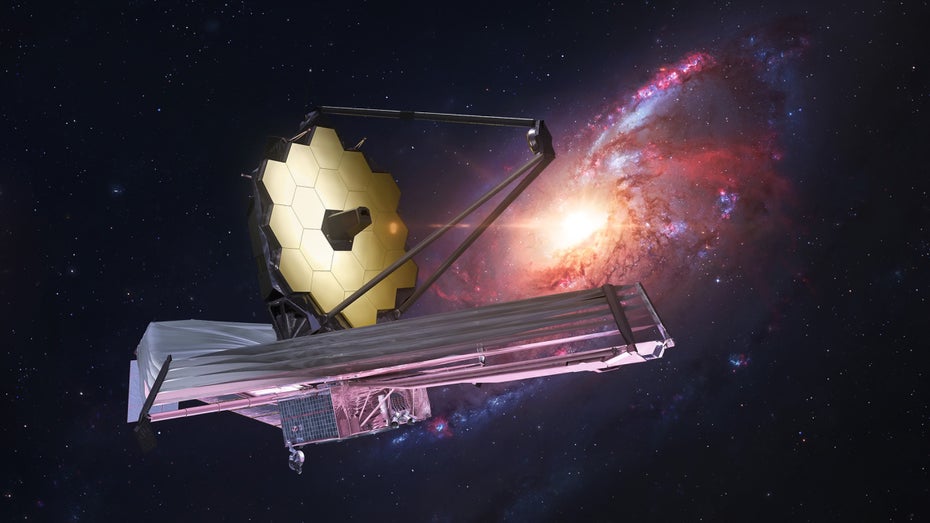
A research team aimed to analyze the chemical composition of the early universe but found even the James Webb Space Telescope to be insufficient for their specific needs. To overcome this limitation, they redirected the powerful telescope towards a relatively young dwarf galaxy that exhibits similar chemical conditions. This innovative approach allows them to indirectly study the conditions of the early cosmos by observing a more accessible analogue. The team's strategy highlights the ingenuity required to push the boundaries of astronomical observation with current technology. By focusing on a comparable, albeit younger, galaxy, they can infer crucial details about the formation and evolution of the universe's first structures. This method provides a novel pathway for understanding the primordial universe's chemical makeup and the processes that shaped it.
This research demonstrates a clever workaround to overcome instrumental limitations in astronomical observation. By identifying a proxy target with analogous characteristics, scientists can extend the analytical capabilities of advanced instruments like the James Webb Space Telescope. This approach underscores the importance of comparative studies and the development of indirect observational methods in scientific research. It raises questions about the trade-offs between direct observation of distant, ancient phenomena and the study of more proximate, analogous systems. Looking ahead, such innovative techniques could become increasingly vital as researchers strive to probe the universe's earliest epochs, balancing the pursuit of fundamental knowledge with the practical constraints of observational technology and resource allocation.
AI-generated to prompt reflection — not editorial opinion, not advice, not a statement of fact. How this works.