Astronomers Detect Jet from Intermediate-Mass Black Hole Tearing Star Apart
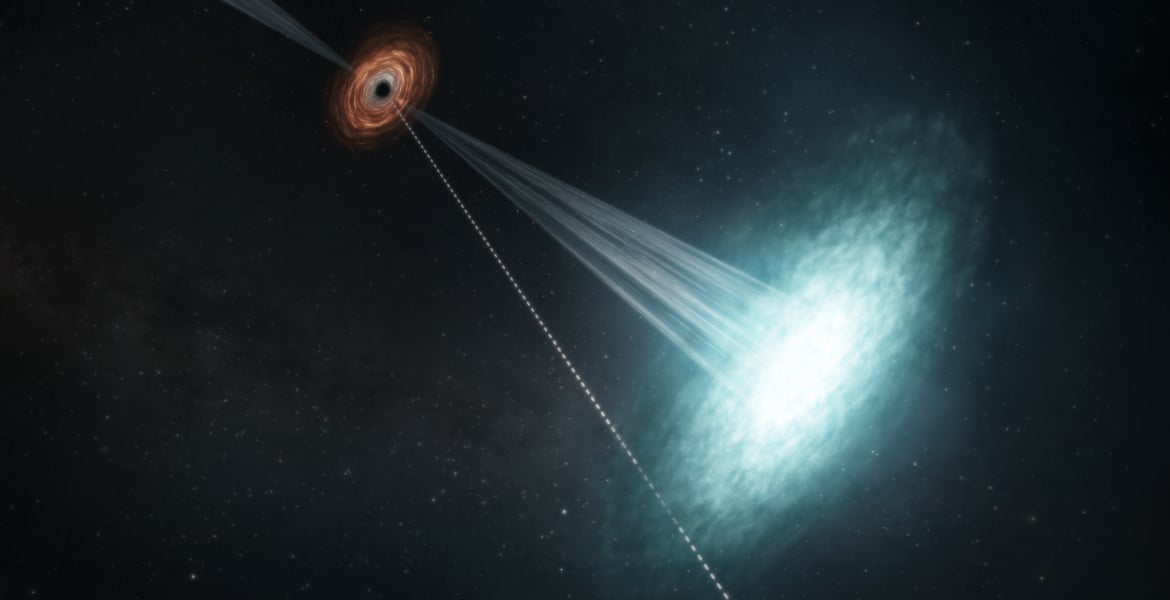
Astronomers utilizing the U.S. National Science Foundation Very Large Array (NSF VLA) have observed a remarkable emission of radio light. This phenomenon occurred during a rare cosmic event where an intermediate-mass black hole destroyed a star. The observation has revealed what seems to be the off-axis afterglow of a potent jet. This finding is significant as it may represent a 'missing link' in understanding black hole behavior. Intermediate-mass black holes are a class of black holes that are more massive than stellar black holes but less massive than supermassive black holes. Their existence and formation mechanisms have been a subject of ongoing debate and research within the astronomical community. The detection of a relativistic jet associated with such an event provides crucial observational evidence that could help bridge the gap in our knowledge about these elusive objects. Further study of this event could offer insights into the processes by which black holes grow and interact with their surroundings.
The observation of a relativistic jet emanating from an intermediate-mass black hole during a stellar disruption event offers a unique empirical data point. This finding could refine theoretical models of black hole accretion and jet formation across different mass scales. Understanding the dynamics of such events is crucial for comprehending galaxy evolution and the distribution of matter in the universe. Future research may focus on the energy transfer mechanisms and the conditions necessary for jet launching in these intermediate-mass systems, potentially revealing commonalities or divergences with stellar and supermassive black hole phenomena.
AI-generated to prompt reflection — not editorial opinion, not advice, not a statement of fact. How this works.