Astronomers Detect Potential Exomoon, But Its Nature Remains Uncertain
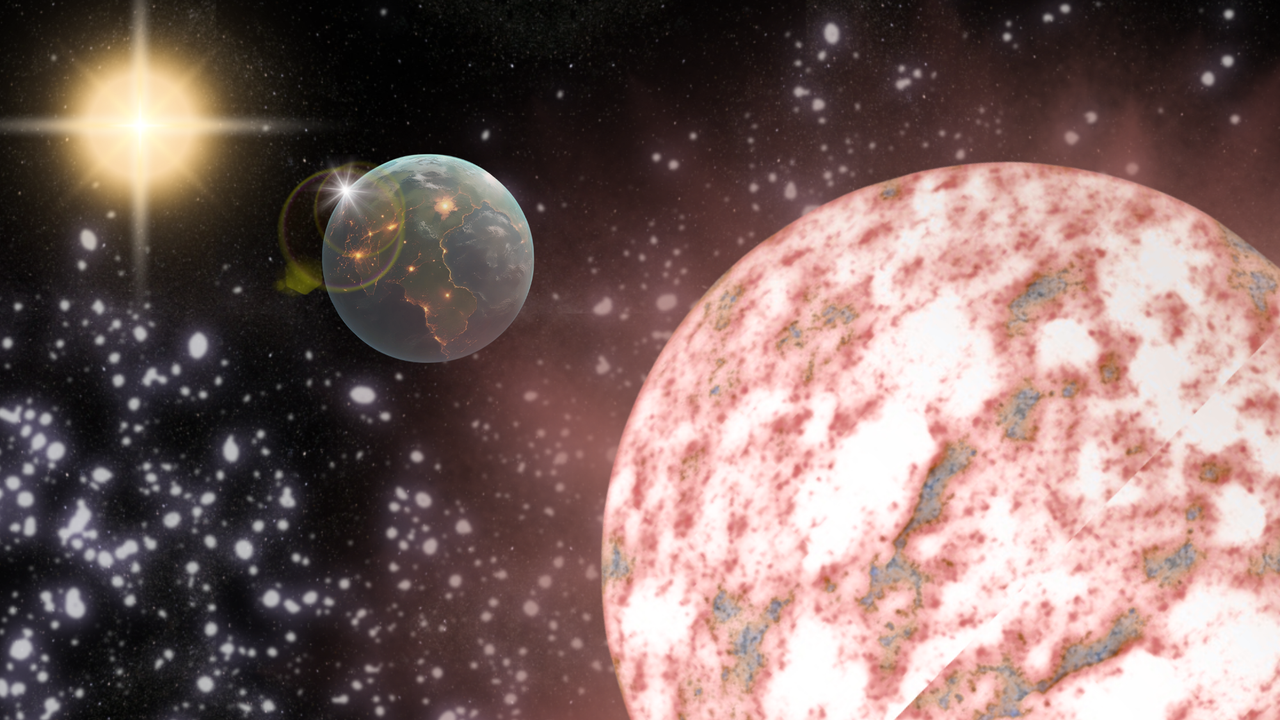
Astronomers may have identified the first moon orbiting a planet outside of our solar system, a discovery that could significantly expand our understanding of planetary formation. However, the researchers acknowledge that the observed object's characteristics are unusual, leading to speculation that it might be something entirely different. This potential exomoon orbits a gas giant planet located approximately 18,000 light-years away in the Kepler-1625 system. The planet itself is already known to be roughly the same size as Neptune and orbits a star similar to our Sun. The detection was made using data from the Hubble Space Telescope, which observed subtle dips in starlight as the planet and its potential moon passed in front of their host star. While the data suggests a moon-like object, its size and orbital characteristics are larger and wider than current planetary formation models predict for a moon. This has led to alternative hypotheses, including the possibility that the object is not a moon at all, but perhaps a second planet of similar size, or even a celestial body that defies current classifications of planets and moons. Further observations are required to confirm the existence and nature of this intriguing celestial object.
The potential discovery of an exomoon, if confirmed, represents a significant advancement in exoplanetary science, pushing the boundaries of our current models for planetary and satellite formation. The ambiguity surrounding the object's nature highlights the limitations of current observational techniques and theoretical frameworks when encountering phenomena that deviate from established patterns. This situation invites a re-evaluation of classification criteria for celestial bodies and underscores the dynamic, often unpredictable, evolution of planetary systems. Future research will likely focus on refining detection methods and developing more robust theoretical models to accommodate such anomalous findings, potentially reshaping our cosmic perspective.
AI-generated to prompt reflection — not editorial opinion, not advice, not a statement of fact. How this works.