Astronomers Discover 31 Quasars, Deepening Cosmic Mystery
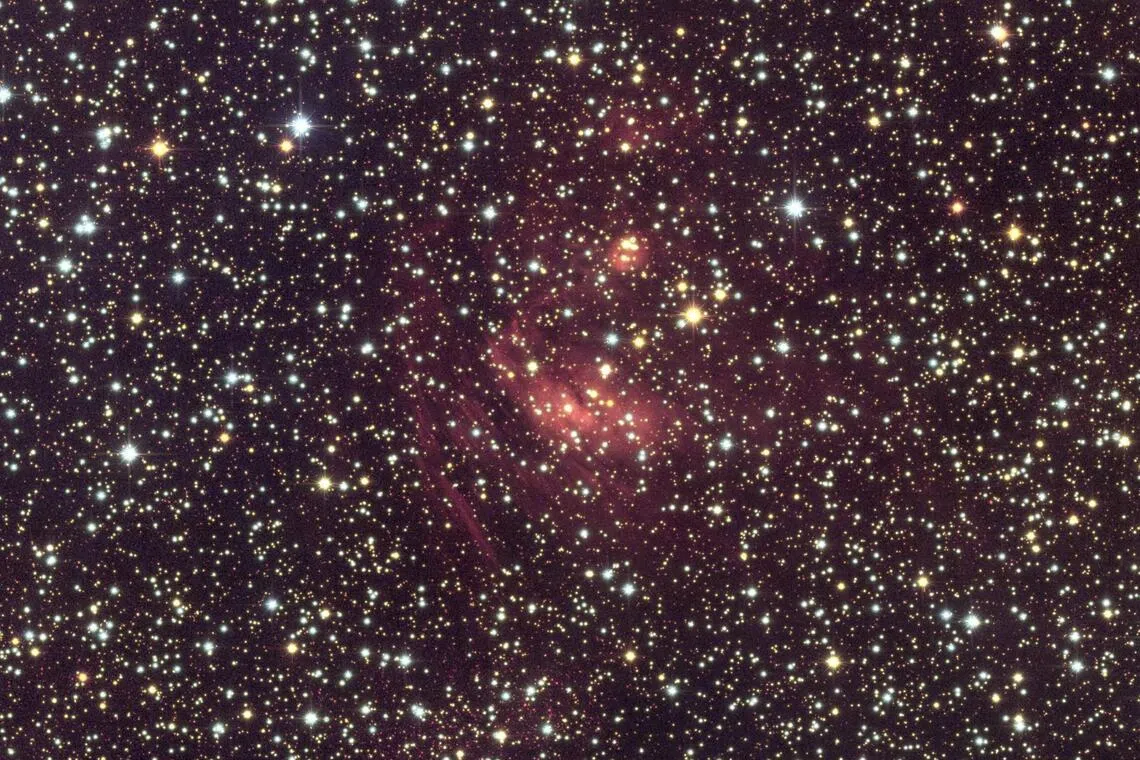
An international team of astronomers has announced the discovery of 31 quasars, marking a significant addition to our understanding of the early universe. These newly identified quasars are notable for their extreme age, with some dating back to a period shortly after the Big Bang. Their existence challenges current cosmological models, which struggle to explain how such massive and luminous objects could have formed so early in the universe's history. The discovery adds to a growing body of evidence suggesting that the universe evolved differently in its nascent stages than previously theorized. Researchers are now working to analyze the properties of these quasars in greater detail to glean more insights into the conditions of the early cosmos. This finding is expected to spur further research into the formation and evolution of supermassive black holes and the galaxies they inhabit. The team utilized advanced observational techniques and data analysis to identify these distant objects. The implications of these findings could lead to a revision of current astrophysical theories. The discovery was made by a collaborative effort involving scientists from various institutions worldwide.
The discovery of these ancient quasars presents a compelling challenge to established astrophysical models. The presence of such developed structures so early in cosmic history suggests that the mechanisms governing galaxy and supermassive black hole formation may operate more rapidly or differently than currently understood. This could indicate a need to re-evaluate the timeline of cosmic evolution and the initial conditions that seeded the universe's large-scale structure. Future research will likely focus on refining theoretical frameworks to accommodate these observations, potentially leading to new insights into the interplay between dark matter, baryonic matter, and the growth of early galactic nuclei. The findings highlight the dynamic and often surprising nature of cosmic evolution, emphasizing the ongoing process of scientific discovery and refinement.
AI-generated to prompt reflection — not editorial opinion, not advice, not a statement of fact. How this works.