Astronomers Discover Faintest Exoplanet Ever Seen After Ten-Year Search
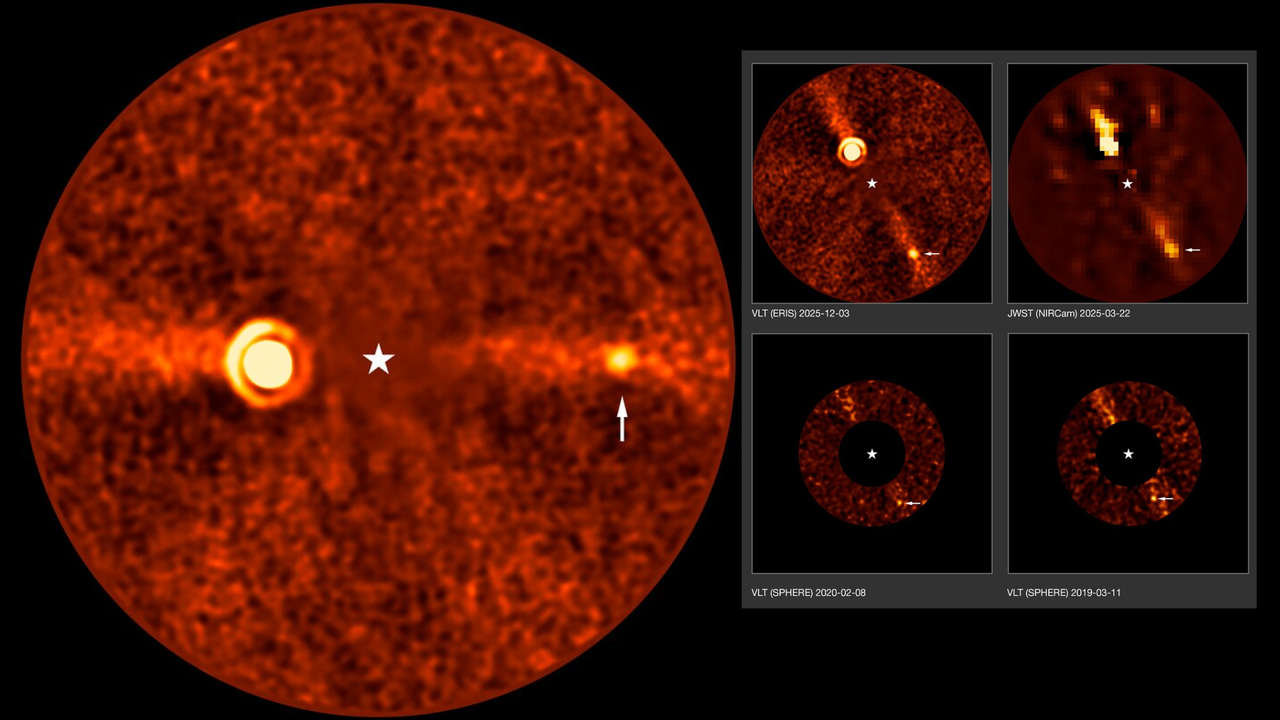
After a decade-long pursuit, astronomers have successfully detected the faintest exoplanet ever observed from Earth. The planet orbits the star Beta Pictoris, located in the Beta Pictoris system. This discovery marks a significant achievement in exoplanet detection, pushing the boundaries of what is currently observable. The prolonged search highlights the challenges involved in finding smaller or dimmer celestial bodies. The Beta Pictoris system has been a subject of interest for astronomers due to its relative proximity and the presence of a known gas giant. This newly found exoplanet adds another layer of complexity and intrigue to our understanding of planetary formation and evolution around young stars. Further observations will be crucial to characterize the exoplanet's properties, such as its mass, atmosphere, and orbital dynamics. The success of this decade-long endeavor underscores the persistence and technological advancements in the field of astronomy.
The successful detection of the faintest exoplanet to date, following a ten-year observational campaign, demonstrates the increasing sophistication of astronomical instruments and data analysis techniques. This achievement allows for a more nuanced understanding of planetary system architectures, particularly around young, active stars like Beta Pictoris. Future research will likely focus on characterizing the atmospheric composition and formation history of this exoplanet, potentially revealing new insights into the diversity of planetary bodies and the conditions under which they form. The long-term nature of such discoveries underscores the importance of sustained investment in scientific research and the development of next-generation observational capabilities to address fundamental questions about our universe.
AI-generated to prompt reflection — not editorial opinion, not advice, not a statement of fact. How this works.