Astronomers Discover First Moon Orbiting Planet in Another Solar System
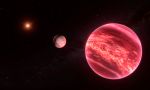
Astronomers have announced the groundbreaking discovery of the first exomoon, a moon orbiting a planet outside our solar system. This celestial body is located in a peculiar solar system and is notable for its immense size, comparable to that of Jupiter. The exomoon orbits a brown dwarf, a type of celestial object that is more massive than a planet but less massive than a star. This discovery marks a significant milestone in the field of exoplanet and exomoon research, expanding our understanding of planetary systems beyond our own. The unusual nature of the host solar system adds to the intrigue of this finding. Further observations are expected to reveal more details about the exomoon's composition, atmosphere, and the dynamics of its orbit around the brown dwarf.
The detection of an exomoon around a brown dwarf challenges conventional models of planetary and lunar formation, suggesting that such systems may be more common than previously assumed. This finding prompts a re-evaluation of the conditions under which moons can form and persist, particularly in environments dominated by substellar objects. Future research will likely focus on the prevalence of such systems and the potential for habitability, considering the unique astrophysical conditions. Understanding the formation pathways for these large moons could offer insights into the diversity of planetary architectures across the galaxy.
AI-generated to prompt reflection — not editorial opinion, not advice, not a statement of fact. How this works.