Astronomers Discover Two 'Superpuff' Planets with Jupiter-Sized Volume and Cotton Candy Density
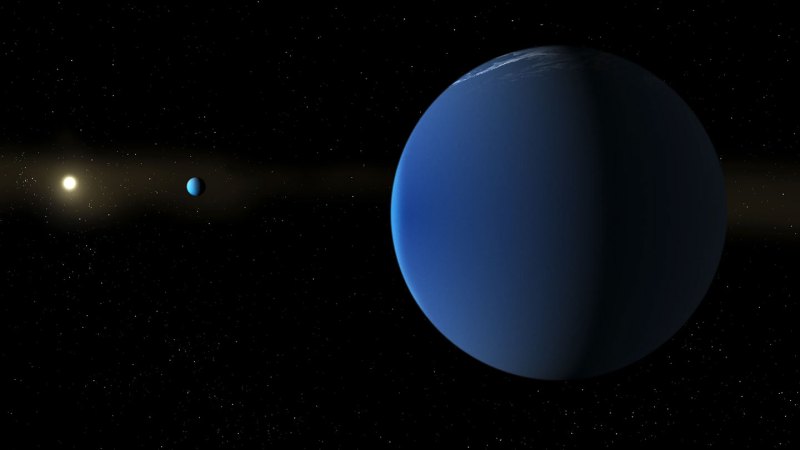
Astronomers have identified two "superpuff" exoplanets located over 1,000 light-years away from Earth. These planets orbit a star similar to our Sun. Despite having a volume comparable to Jupiter, their density is remarkably low, akin to cotton candy. This discovery adds to the growing catalog of unusual exoplanetary characteristics observed by scientists. The "superpuff" designation highlights their extremely low density relative to their size. Further study of these distant worlds could provide new insights into planetary formation and atmospheric composition in diverse stellar environments. The immense distance means direct observation is challenging, relying on sophisticated telescopic data analysis.
The discovery of "superpuff" planets like these challenges existing models of planetary formation and atmospheric physics. The extreme low density suggests unique atmospheric compositions or formation histories, prompting further investigation into the range of planetary possibilities within our galaxy. Understanding the mechanisms that create such low-density, large-volume planets could refine our search for potentially habitable worlds by broadening the criteria for atmospheric characteristics. This finding underscores the vast diversity of planetary systems and the ongoing need for advanced observational techniques to characterize exoplanets.
AI-generated to prompt reflection — not editorial opinion, not advice, not a statement of fact. How this works.