Astronomers Explain How a Planet Survived Its Star's Red Giant Phase
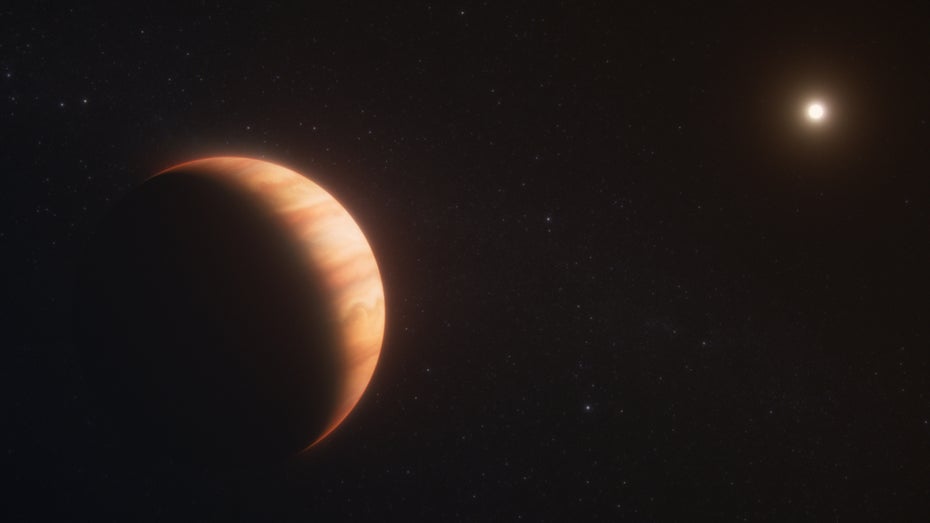
Astronomers have found an explanation for the existence of planet WD 1856 b, which orbits a white dwarf star. This planet should not exist because it was expected to have been engulfed and destroyed during its star's red giant phase. During this phase, stars expand significantly, and planets in close orbits are typically consumed. The survival of WD 1856 b presents a significant puzzle for astrophysicists. Researchers are now investigating the specific conditions and orbital dynamics that allowed this exoplanet to endure. Understanding this phenomenon could provide new insights into planetary system evolution and the resilience of celestial bodies under extreme stellar conditions. The discovery challenges existing models of stellar and planetary interactions.
The survival of WD 1856 b challenges current astrophysical models of planetary system evolution around dying stars. This anomaly suggests that orbital dynamics or gravitational interactions within the system may have played a crucial role in protecting the planet. Future research could refine our understanding of the long-term stability of exoplanetary systems, particularly those transitioning through stellar life cycles. This offers a unique case study for exploring the resilience of planetary bodies and the complex interplay of forces that govern their existence over cosmic timescales, potentially impacting theories on habitability in diverse stellar environments.
AI-generated to prompt reflection — not editorial opinion, not advice, not a statement of fact. How this works.