Astronomers Investigate Galaxy Spiral Arm Formation Using Euclid Data
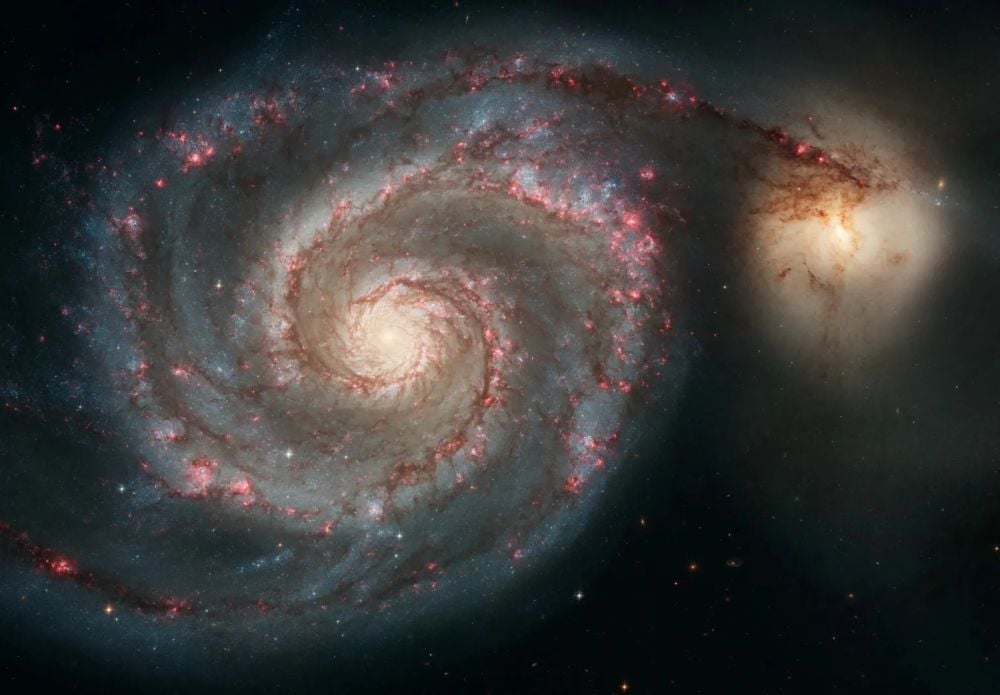
The formation and persistence of spiral arms in galaxies, such as the Whirlpool galaxy, remain an ongoing mystery for astronomers. While spiral galaxies are common, the exact mechanisms driving the creation and long-term stability of their arms, as well as the variation in the number of arms observed across different galaxies, are not fully understood. Recent research utilizing data from the Euclid space telescope has begun to shed light on this phenomenon. The study has identified correlations between a galaxy's mass, its rate of star formation, and the number of spiral arms it possesses. These findings suggest potential pathways for how these prominent galactic structures might form and be maintained over vast timescales.
The study of galactic spiral arms highlights a persistent challenge in astrophysics: reconciling theoretical models with observational data. While Euclid's findings offer new correlations between galaxy mass, star formation rates, and arm structure, the underlying physical processes driving these relationships require further investigation. Future research will likely focus on refining simulations to account for these observed patterns, potentially revealing how gravitational forces, stellar feedback, and dark matter distributions interact to shape galactic morphology over billions of years. Understanding these dynamics is crucial for a comprehensive model of galaxy evolution in the context of cosmic structure formation.
AI-generated to prompt reflection — not editorial opinion, not advice, not a statement of fact. How this works.