Astronomers May Have Found Betelgeuse's Stellar Companion
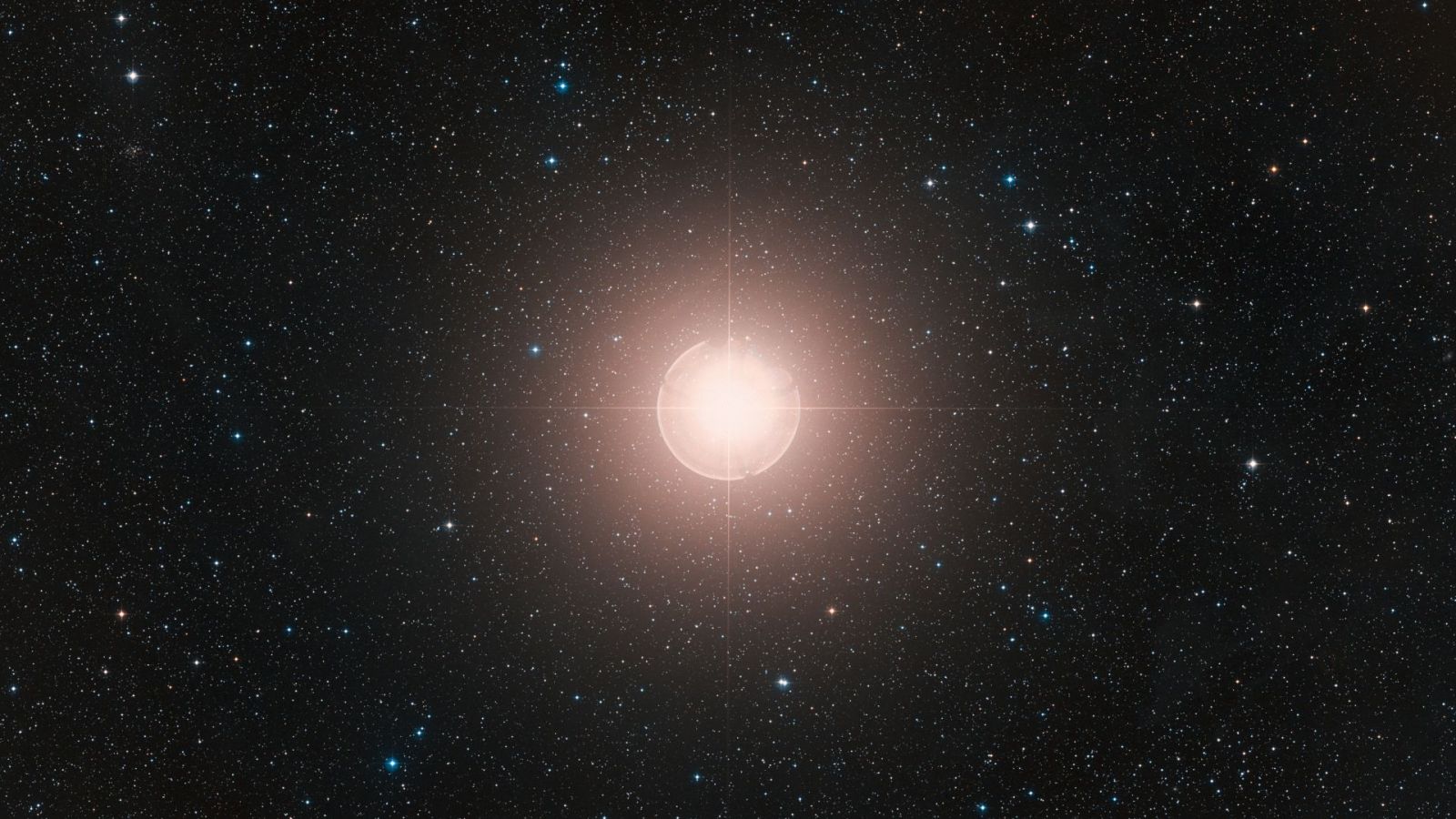
For years, astronomers have gathered evidence suggesting that the giant star Betelgeuse might have a stellar companion orbiting it. A recent study aims to resolve lingering uncertainties about this potential companion. While the study significantly reduces doubts, it does not entirely eliminate them. The research focused on analyzing the light and behavior of Betelgeuse, a red supergiant star in the constellation Orion. Previous observations had noted unusual dimming events and variations in Betelgeuse's brightness, which could be explained by the presence of a nearby star. This companion star, if confirmed, could influence Betelgeuse's evolution and its eventual supernova. The study employed advanced observational techniques and data analysis to scrutinize the star system. The findings suggest a high probability of a companion, but further observations are deemed necessary for definitive confirmation. The scientific community awaits these follow-up studies to confirm or refute the existence of this elusive stellar partner.
The ongoing investigation into Betelgeuse's potential companion highlights the challenges in observing distant celestial bodies and interpreting complex astronomical data. While new studies aim to reduce uncertainty, the inherent difficulty in distinguishing faint signals from background noise or instrumental effects can prolong scientific consensus. This pursuit reflects a broader scientific endeavor to understand stellar evolution, particularly the final stages of massive stars like Betelgeuse. Future advancements in telescope technology and data processing algorithms will likely be crucial in resolving such astronomical mysteries, offering deeper insights into the dynamics of binary and multiple star systems and their impact on galactic evolution over the next decade.
AI-generated to prompt reflection — not editorial opinion, not advice, not a statement of fact. How this works.