Astronomers Puzzled by Celestial Object Orbiting Brown Dwarf: Planet or Moon?
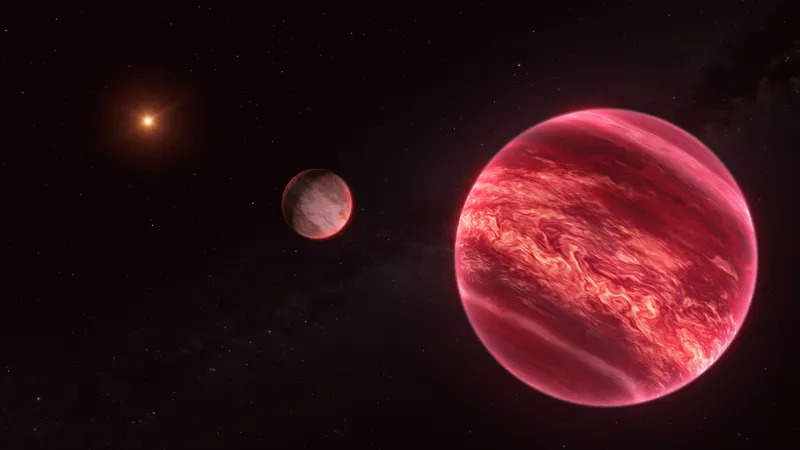
Astronomers have discovered a new celestial object that challenges existing classifications, blurring the lines between a planet and a moon. This enigmatic body orbits a brown dwarf, which itself orbits a star. The object's unique orbital characteristics have left researchers uncertain about its precise nature. They are currently debating whether it should be classified as a planet, a moon, or an entirely new category of celestial body. Further observation and analysis are required to resolve this classification dilemma. The discovery highlights the vastness and complexity of the universe, where new and unexpected phenomena continue to be found. This finding could prompt a re-evaluation of how we define and categorize celestial objects in the future.
This discovery presents a fascinating case study in the evolving nature of astronomical classification. As observational capabilities improve, we encounter celestial bodies that do not fit neatly into predefined categories, suggesting our current models may be too rigid. The incentive for astronomers is to refine these models to encompass new phenomena, fostering a more comprehensive understanding of planetary system formation and evolution. This situation underscores the dynamic interplay between scientific observation and theoretical frameworks, where new data can challenge established paradigms and drive scientific progress. The long-term implication is a potential expansion of our cosmic taxonomy, reflecting a more nuanced view of the universe's diversity.
AI-generated to prompt reflection — not editorial opinion, not advice, not a statement of fact. How this works.