Atomic Force Microscopes Reveal Nanoscale Worlds Without Light
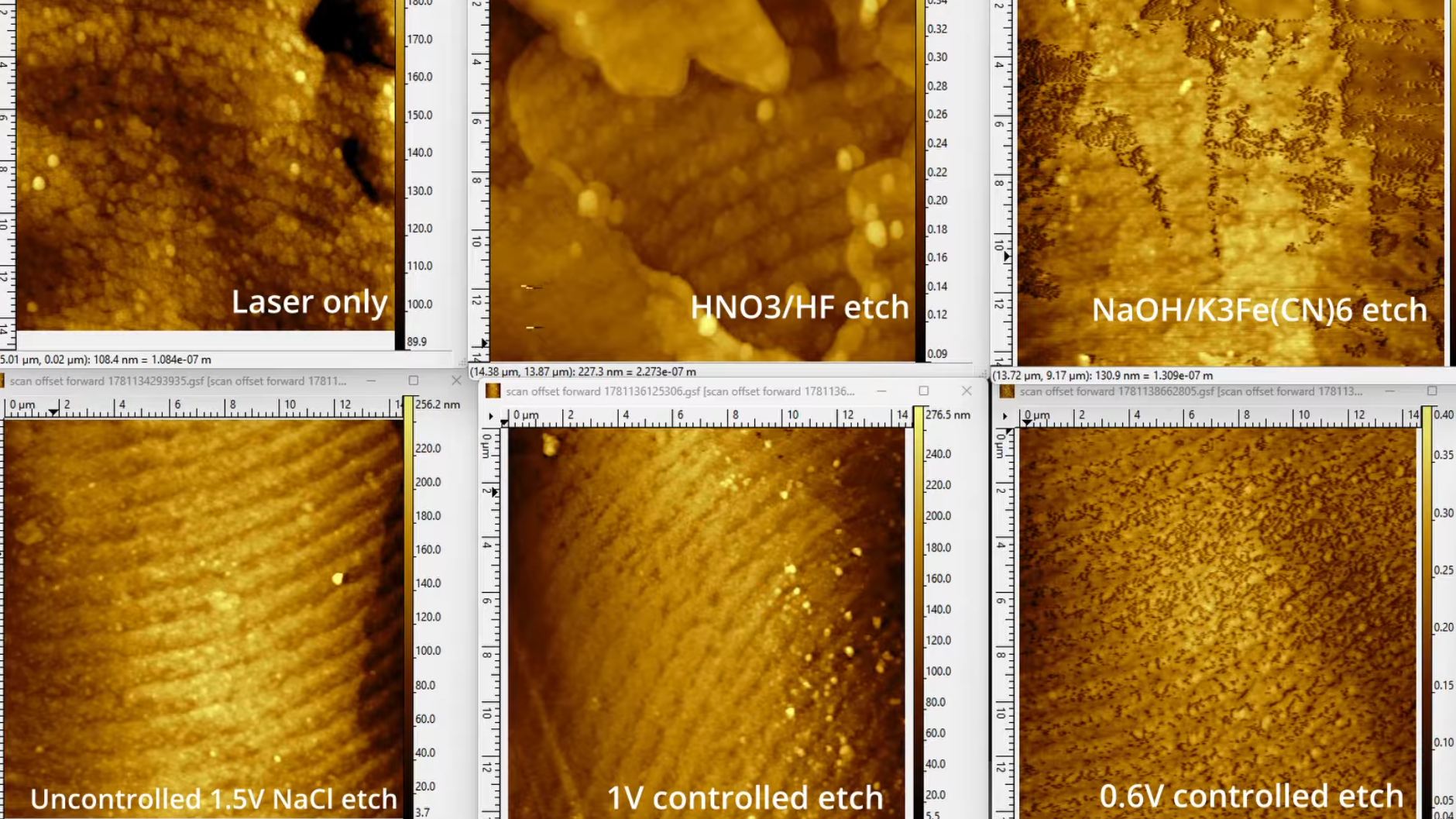
Atomic Force Microscopes (AFMs) offer a unique imaging capability by eschewing optical beams, unlike most other microscopes. Instead of light, AFMs employ a physical probe to meticulously scan and detect the surface topography of their subjects. This direct physical interaction allows for the visualization of incredibly fine details at the nanoscale, revealing structures such as bacteria and nanostructures. The technology's ability to operate without light makes it suitable for a wide range of applications where optical methods might be limited or disruptive. By precisely measuring the forces between the probe and the sample, AFMs generate high-resolution images, providing insights into material properties and biological structures. This non-optical approach is crucial for studying delicate samples that could be damaged by light or heat. The resolution achieved by AFMs surpasses that of traditional light microscopy, opening new avenues for scientific discovery in fields like materials science, nanotechnology, and life sciences. The technology's versatility allows it to image various types of surfaces, from conductive to insulating materials. Its development represents a significant advancement in our ability to observe and understand the microscopic world.
The development of atomic-force microscopy represents a significant paradigm shift in scientific visualization, moving beyond the limitations of optical physics. By leveraging physical interaction, AFMs provide a crucial tool for exploring nanoscale phenomena without the potential sample degradation associated with light-based methods. This innovation addresses a fundamental challenge in scientific observation: achieving high resolution on delicate or non-optical samples. As we move further into an era defined by advanced materials and biological engineering, the demand for such precise, non-invasive imaging techniques will only intensify. Understanding the underlying principles and applications of AFM is vital for scientists and engineers aiming to push the boundaries of discovery in the coming decade, particularly in fields requiring atomic-level precision.
AI-generated to prompt reflection — not editorial opinion, not advice, not a statement of fact. How this works.