Australian Children's Play Sand Found to Release Toxic Airborne Asbestos
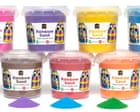
New research has revealed that children's play sand sold in Australia, which was previously found to be contaminated with asbestos, can release hazardous airborne asbestos fibers. This finding directly contradicts earlier statements suggesting that products removed from shelves due to asbestos concerns posed only a 'low risk.'
A study conducted by Auckland University of Technology (AUT) found that a significant 90% of craft sand samples tested released asbestos into the air during typical play. Both the Australian Competition and Consumer Commission (ACCC) and the lead researcher from AUT have confirmed that these contaminated products were indeed distributed and sold within Australia. The discovery raises serious concerns about the potential health risks to children exposed to these materials.
This research highlights a critical gap between regulatory assurances and real-world product safety, particularly concerning children's items. The discrepancy between the 'low risk' assessment and the observed release of airborne asbestos underscores the importance of rigorous, independent testing that simulates actual product use. Future regulatory frameworks may need to incorporate dynamic testing methodologies to better capture potential hazards that emerge during interaction, rather than relying solely on static composition analysis. This situation also prompts consideration of supply chain transparency and the efficacy of recall processes to ensure genuinely safe products reach consumers.
AI-generated to prompt reflection — not editorial opinion, not advice, not a statement of fact. How this works.