Australian Dock Workers Seek Shorter Week Amid AI Automation Concerns
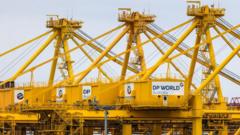
Australian dock workers are advocating for a 28-hour work week as they face increasing automation and artificial intelligence (AI) being tested across ports. The Maritime Union of Australia (MUA) has stated that workers are "in the crosshairs" of these technological advancements. The union's proposal comes amid broader discussions about the impact of AI on the workforce and the potential for job displacement. The MUA's stance highlights growing anxieties among blue-collar workers regarding the integration of AI into industries traditionally reliant on manual labor. This push for reduced working hours could set a precedent for other sectors grappling with similar automation challenges. The union aims to ensure that the benefits of increased productivity through AI are shared with the workforce, rather than solely accruing to employers. The specific details of the AI testing across ports have not been fully disclosed, but the union's proactive stance suggests significant concerns about the pace and nature of these changes.
AI-driven automation in port operations presents a complex challenge for labor unions, balancing the potential for increased efficiency and productivity against the risk of job displacement and altered working conditions. The demand for a shorter work week, such as the proposed 28-hour week, can be viewed as a strategic response to ensure that the economic gains from automation are distributed more equitably among the workforce. This approach seeks to preserve employment levels and improve work-life balance in the face of technological disruption. As AI continues to integrate into various industries, labor negotiations will likely increasingly focus on the distribution of productivity gains and the restructuring of work hours. The long-term implications involve adapting labor models to a future where human roles may shift towards oversight, specialized tasks, or areas less susceptible to automation, necessitating continuous reskilling and policy adjustments.
AI-generated to prompt reflection — not editorial opinion, not advice, not a statement of fact. How this works.