Austrian Governor Defends Controversial Appointment to Islamism Watchdog
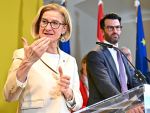
Lower Austria Governor Johanna Mikl-Leitner has defended the recent appointments to the newly established Islamism Observation Center, which was founded by the ruling ÖVP-FPÖ coalition. The center aims to monitor and analyze Islamist activities within the state. However, religious scholars have raised concerns regarding the composition of the advisory board for this new institution. They argue that the board lacks the necessary expertise in religious studies and related fields to effectively fulfill its mandate. The scholars are calling for a restructuring of the advisory board to include individuals with more relevant academic backgrounds and experience. Governor Mikl-Leitner has dismissed these criticisms, suggesting that the current appointments are appropriate. She indicated that the government stands by its decision and does not see a need for immediate changes to the board's structure or membership.
The establishment of an Islamism Observation Center by the ÖVP-FPÖ coalition in Lower Austria presents a complex governance challenge. While the stated intent is to monitor potential threats, the criticism from religious scholars highlights a potential disconnect between policy objectives and expert input. The governor's dismissal of these concerns suggests a possible prioritization of political alignment over academic rigor in the appointment process. This approach could undermine the credibility and effectiveness of the center, potentially leading to biased analysis or a failure to accurately assess nuanced societal dynamics. In the coming decade, such institutions will face increasing scrutiny regarding their methodologies and the scientific basis of their findings, particularly as AI-driven analysis becomes more prevalent, demanding greater transparency and verifiable expertise.
AI-generated to prompt reflection — not editorial opinion, not advice, not a statement of fact. How this works.