Ayatollah Ali Khamenei's funeral held in Tehran, sons attend but successor absent
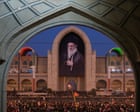
Ayatollah Ali Khamenei, the former Iranian leader, was honored in a funeral ceremony on Sunday in Tehran. Three of his sons, Mostafa, Meysam, and Masoud Khamenei, were present and prayed beside the coffins of their father and four other family members. The ceremonies took place in the Imam Khomeini Mosalla, a large religious complex. The country has organized a week of mass funeral processions for Khamenei, which will include taking his remains to Shia religious sites in neighboring Iraq. Notably, Mojtaba Khamenei, who has succeeded his father as Iran's supreme leader, was not seen at the funeral prayers. State TV broadcasted the event, showing the sons participating in the public display of devotion to the theocratic state.
The absence of Mojtaba Khamenei, the designated successor, from his father's funeral ceremonies, while his brothers were present, could be interpreted through various lenses. From a governance perspective, it might signal a strategic decision to maintain a lower public profile during a sensitive transition period, avoiding any perception of leveraging familial ties for political consolidation. Alternatively, it could reflect established protocols for succession, emphasizing institutional continuity over personal presence. The extensive public mourning rituals, including processions to Iraq, serve to reinforce the legitimacy and reach of the theocratic state, projecting an image of national unity and religious devotion. The media's focus on the attending sons, juxtaposed with the successor's absence, may be a deliberate narrative choice to manage public perception of the leadership transition in the coming decade.
AI-generated to prompt reflection — not editorial opinion, not advice, not a statement of fact. How this works.