Ayatollah Khamenei, Iran's assassinated leader, buried in Mashhad shrine
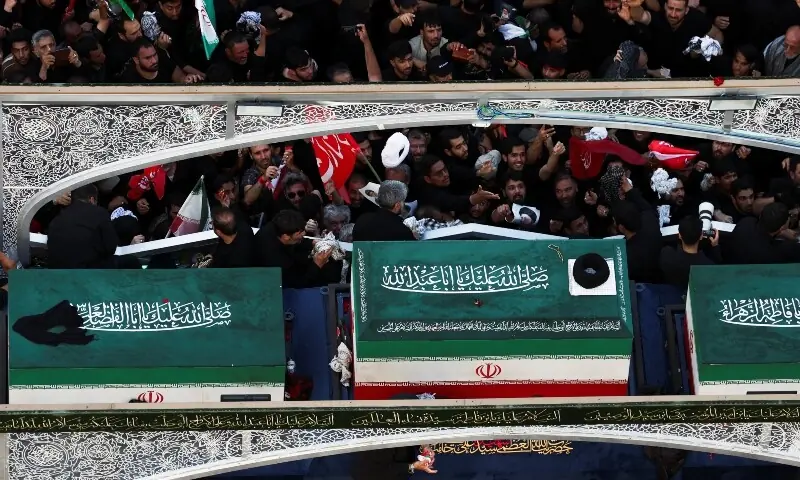
Ayatollah Ali Khamenei, Iran's assassinated supreme leader, was laid to rest in the Shrine of Imam Reza in Mashhad, Iran's holiest shrine, state media reported early Friday. His burial followed a week of extensive funeral processions, rallies, and mourning ceremonies held across Iran and Iraq. Khamenei was assassinated on February 28, marking the initial strikes of a war that began four months prior, though a truce with the United States was agreed upon last month. His body was transported by truck through crowded Mashhad streets, accompanied by clerics and black-clad mourners waving Iranian flags and revolutionary slogans. The funeral events have been characterized by widespread public attendance, encouraged by the country's clerical leaders. The whereabouts of Ayatollah Mojtaba Khamenei, who was proclaimed supreme leader in early March, remain unknown to the public. He has not appeared in public since the war began, reportedly due to severe injuries sustained in the strike that killed his father, and security concerns about potential further US attacks. During the funeral proceedings in Mashhad, crowds chanted slogans demanding revenge against US President Donald Trump. "I swear by the blood of the supreme leader, Trump, we will kill you!" was among the shouted slogans, with some women holding placards reading "Kill Trump." The shrine's courtyard was filled with mourners chanting "Death to America" amidst funeral laments and music. Khamenei's coffin was airlifted by helicopter to the shrine for the final interment. His oldest son, Mostafa, led the funeral prayer, and mourners carried the flag-painted coffin inside. The official IRNA news agency confirmed the completion of burials for Khamenei and four family members assassinated with him, concluding a period of mourning that included parades through Tehran, Qom, and Iraqi cities.
The funeral of Ayatollah Ali Khamenei, following his assassination, highlights the complex interplay of national mourning, political succession, and geopolitical tensions. The public display of grief and calls for retribution against the United States underscore the regime's efforts to consolidate national unity and project strength in the face of external conflict and internal uncertainty regarding Mojtaba Khamenei's succession. The prolonged absence and reported injuries of Mojtaba Khamenei raise questions about the stability of the leadership transition and the potential for internal power dynamics to influence Iran's future foreign policy and domestic stability. The events suggest a strategic calculation by Iranian authorities to leverage nationalistic sentiment and anti-Americanism to bolster the legitimacy of the current leadership and manage public expectations during a critical period.
AI-generated to prompt reflection — not editorial opinion, not advice, not a statement of fact. How this works.