Ayyubid Era Madrasas: Sultan Saladin's Educational Legacy Beyond Military Conquests
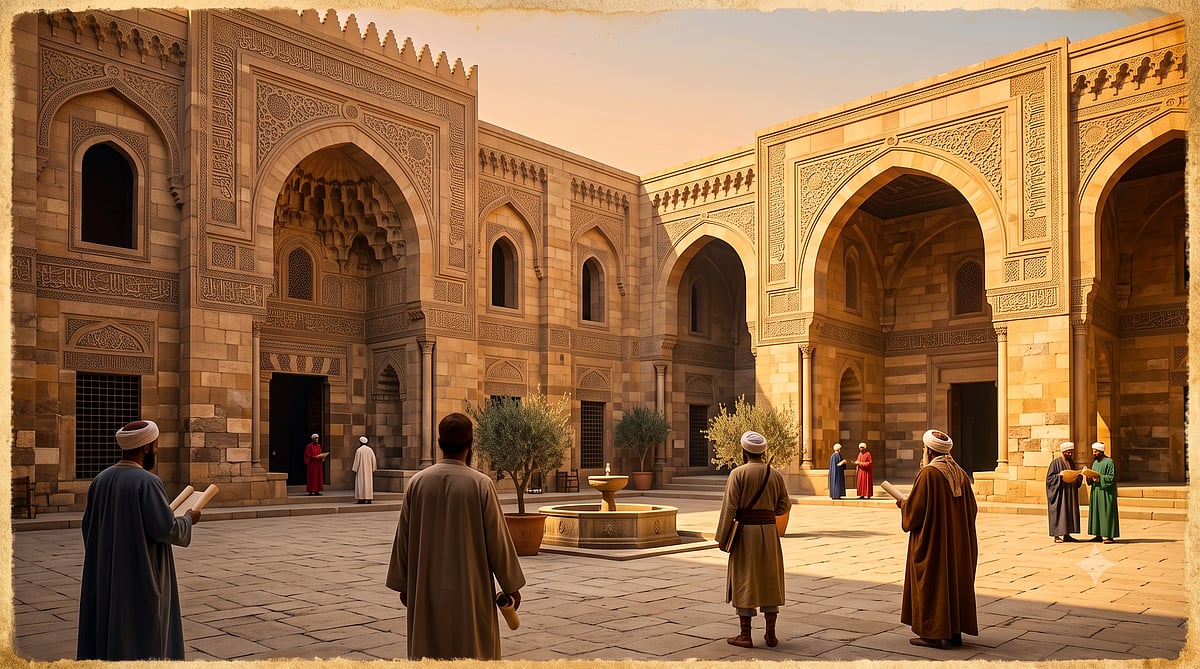
Sultan Saladin's military victories against Crusaders are well-known, but his concurrent educational reforms are less discussed. Following two centuries of Fatimid Shi'ite rule in Egypt, the restoration of Sunni Islam required more than military might; it necessitated institutions to cultivate a new generation of scholars, judges, and administrators. This understanding formed the core of the Ayyubid educational policy.
Egyptian historian Al-Maqrizi documented Saladin's establishment of numerous Sunni madrasas in Cairo, Aleppo, and Damascus, inspired by his predecessor Nur al-Din Zengi's educational initiatives. Saladin even halted Friday prayers and Shi'ite activities at Al-Azhar, which was later revived as a Sunni educational center by Mamluk Sultan Rukn al-Din Baybars in 665 AH. The madrasas were funded by waqf (endowed) agricultural lands in the Fayyum region, with income from grain sales supporting teachers and students, ensuring financial independence from the state treasury.
More than twenty madrasas were established in Cairo and Fustat during the Ayyubid era, though most no longer exist. Four became particularly famous: Al-Madrasatul Kamhiyya, named for the wheat it produced and funded by waqf lands, which later saw Ibn Khaldun appointed as its chief scholar by Sultan Barquq; Al-Madrasatun Nasiriyyah, dedicated to Shafi'i jurisprudence near Imam Shafi'i's shrine, where teachers received a substantial monthly stipend of 40 gold dinars; Al-Madrasatus Salahiyya, considered a premier institution and described by Imam Jalal al-Din al-Suyuti as the 'Crown of Madrasas' due to its grandeur and curriculum; and Al-Madrasatul Faziliah, founded by Saladin's vizier Qadi al-Fadil, where Imam Shatibi taught the Quran and Tajwid to large student bodies.
A significant innovation was the establishment of institutions that accommodated all four Sunni legal schools (Hanafi, Maliki, Shafi'i, and Hanbali) under one roof. The first such institution in Egypt was Al-Madrasatus Salihiah, built by Sultan Al-Malik Al-Saleh Najm al-Din Ayyub in Cairo around 1242-43 AD, breaking down the former Fatimid palace. This approach fostered Sunni unity by giving equal status to all four schools, a practice later continued by the Mamluks with the appointment of separate chief judges for each school. The 'ijazah' system, a form of academic license or permission to teach, served as the equivalent of a degree, emphasizing oral transmission of knowledge from teacher to student and the importance of an unbroken chain of scholarship.
The Ayyubid educational system's greatest achievement was creating a self-sustaining structure independent of the state treasury, relying on waqf endowments. This financial autonomy allowed these institutions to endure through changes in rulers, with Saladin's successors and the Mamluks maintaining them. The remnants of Al-Salihiah on Al-Muizz Street in Cairo stand as a reminder of a sultan's ambition and the enduring legacy of an educational system.
The Ayyubid educational reforms, particularly the establishment of madrasas funded by endowments, demonstrate a strategic approach to consolidating Sunni Islam and administrative capacity following the Fatimid era. By creating institutions independent of direct state funding, the Ayyubid dynasty fostered a degree of institutional resilience, allowing the educational infrastructure to persist across political transitions. The integration of the four major Sunni legal schools within single institutions aimed to promote religious unity and reduce sectarian friction, a pragmatic governance strategy. This model highlights the long-term impact of establishing robust, self-sustaining systems that can outlast the immediate political objectives of their founders, offering a historical precedent for institutional design focused on enduring societal impact rather than ephemeral political control.
AI-generated to prompt reflection — not editorial opinion, not advice, not a statement of fact. How this works.