Azad Jammu and Kashmir Elections Begin in Mirpur Division Amidst Security Measures
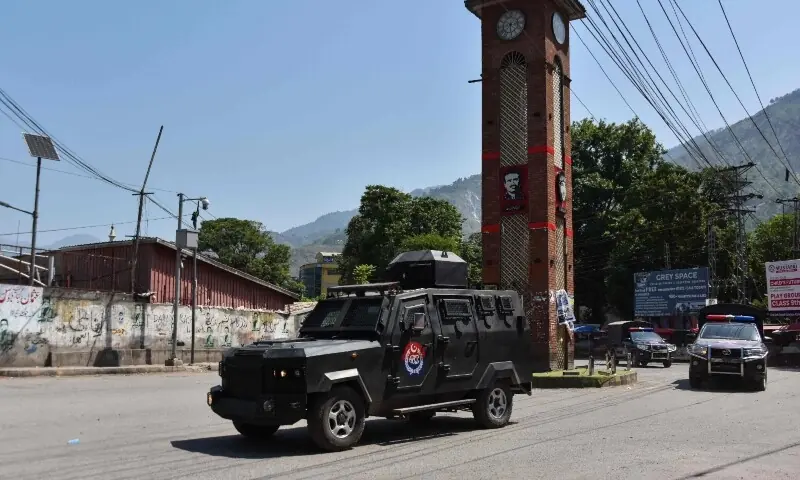
The initial phase of the Azad Jammu and Kashmir (AJK) elections has commenced in the 13 constituencies of Mirpur division, with polling stations open from 8 AM to 5 PM. Monday was declared a public holiday across Bhimber, Mirpur, and Kotli districts to facilitate voter participation. A total of 288 candidates are competing for seats in this phase, with 2,316 polling stations established. Security is a major concern, with 1,241 stations classified as 'highly sensitive' and 724 as 'sensitive'. A comprehensive three-tier security plan is in effect, involving 18,560 personnel from police and other law enforcement agencies, including the Pakistan Rangers and the Pakistan Army, with approximately 2,100 army personnel and Quick Response Force teams on standby. The elections are being conducted in three phases due to security considerations, with subsequent phases scheduled for August 2 and August 10 in Muzaffarabad and Poonch divisions, respectively. AJK Chief Election Commissioner Justice (retd) Ghulam Mustafa Mughal urged over 1.4 million registered voters to participate and warned against any disruption of the electoral process. This warning followed a planned long march announced by the proscribed Joint Awami Action Committee (JAAC) from Mirpur to Muzaffarabad, though reports indicated no participants for related rallies. AJK Chief Secretary Khushal Khan also issued stern warnings against disrupting public order. The election campaign saw prominent participation from PPP Chairman Bilawal Bhutto-Zardari and former Prime Minister Nawaz Sharif, with observers viewing the contest as a political rivalry between them. Sharif made remarks referencing districts in Sindh, prompting Bhutto-Zardari to respond by emphasizing the rights of AJK residents and criticizing pre-election 'gifts' of public resources.
The AJK elections highlight the complex interplay of security, political competition, and governance in a contested region. The extensive security deployment, including multiple layers of law enforcement and military presence, underscores the volatile environment and the state's efforts to ensure electoral integrity amidst potential disruptions. The political maneuvering between major national parties, evidenced by campaign rhetoric and resource allocation, suggests an attempt to influence regional outcomes through national political narratives. This dynamic raises questions about the extent to which local governance priorities are shaped by broader national political interests and the potential for external influence on regional self-determination. The electoral process, while providing a platform for representation, operates within a framework where security concerns and political rivalries may overshadow substantive policy debates, prompting a need to examine the long-term implications for democratic development and citizen empowerment in the region.
AI-generated to prompt reflection — not editorial opinion, not advice, not a statement of fact. How this works.