Azad Jammu and Kashmir Elections Face Scrutiny Amid Phased Voting and Trust Deficit
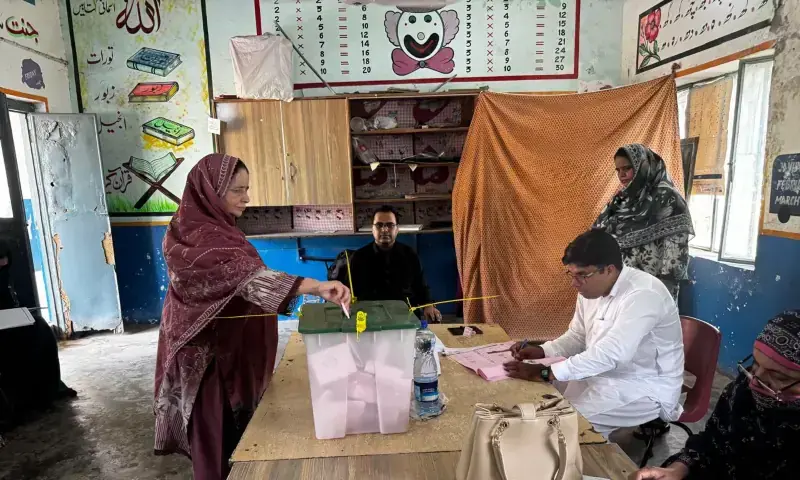
General elections in Azad Jammu and Kashmir (AJK), intended to address the region's political and economic issues democratically, are underway in a three-phase process. The voting began on Monday in Mirpur division, with subsequent phases scheduled for Muzaffarabad division and refugee seats on August 2, and Poonch on August 10. This marks the first time AJK elections have been conducted in phases. Preliminary results suggest the PML-N is leading, followed by the PPP. However, concerns have been raised that announcing results from the first phase could influence voter choices in later rounds. The AJK election commissioner described the polls as "the most difficult" in the region's history, with reports of clashes between the banned Joint Awami Action Committee and law enforcement in Rawalakot, and allegations of irregularities elsewhere. Despite these challenges, voting in Muzaffarabad is proceeding as scheduled. The article suggests that even if phased voting was necessary for security, results should ideally be announced only after the entire process concludes, recommending amendments to election laws that mandate immediate result declarations. The Pakistan Tehreek-e-Insaf (PTI) has boycotted the elections, citing doubts about fairness, while the TTAP alliance and independent candidates backed by the banned JAAC have also raised concerns or faced restrictions. A significant trust deficit is noted, and the incoming government will need to engage all political factions to tackle common challenges.
The phased election structure in AJK, coupled with early result announcements, presents a potential vulnerability for electoral integrity, risking undue influence on subsequent voting stages. This system, while possibly necessitated by security concerns, highlights a tension between logistical requirements and the principle of voter autonomy. The boycott by major parties and reported irregularities underscore a deep-seated trust deficit, suggesting that the legitimacy of the electoral outcome may be challenged regardless of the final results. Moving forward, reforms focusing on transparent result tabulation and communication protocols, alongside robust mechanisms for addressing electoral disputes and ensuring broad participation, will be crucial for fostering democratic stability and public confidence in AJK's governance structures.
AI-generated to prompt reflection — not editorial opinion, not advice, not a statement of fact. How this works.